

Table of Contents
What Exactly Happened
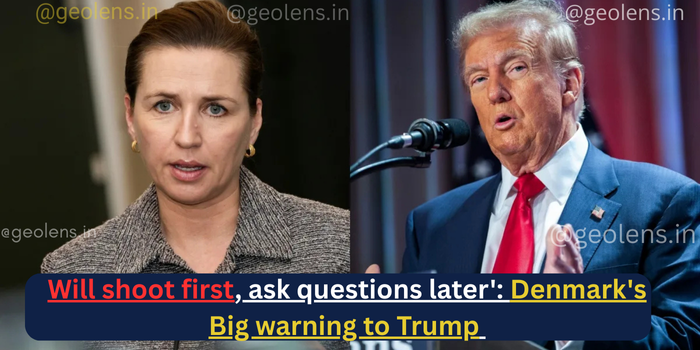
why Trump wants Greenland and why it is so important: Denmark issued a strong military and diplomatic warning to the United States after repeated statements and signals from U.S. President Donald Trump suggesting that Washington wanted to take control of Greenland, potentially without Denmark’s consent.
The warning referenced a standing Danish military doctrine that instructs forces stationed in Greenland to immediately engage any invading force even before political clarification. This doctrine is often summarized bluntly as “Will shoot first, ask questions later.”
This was not casual rhetoric. Denmark’s message was explicit: Any attempt to seize Greenland would be treated as an act of war, even if carried out by a NATO ally like the United States. The incident raised a fundamental question for global observers—why Trump wants Greenland and why it is so important in the first place.
Where is Greenland and why it matter to Trump?
Understanding why Trump wants Greenland and why it is so important requires first understanding its geography, political status, and strategic value.
why Trump wants Greenland and why it is so important: Greenland’s Strategic Importance
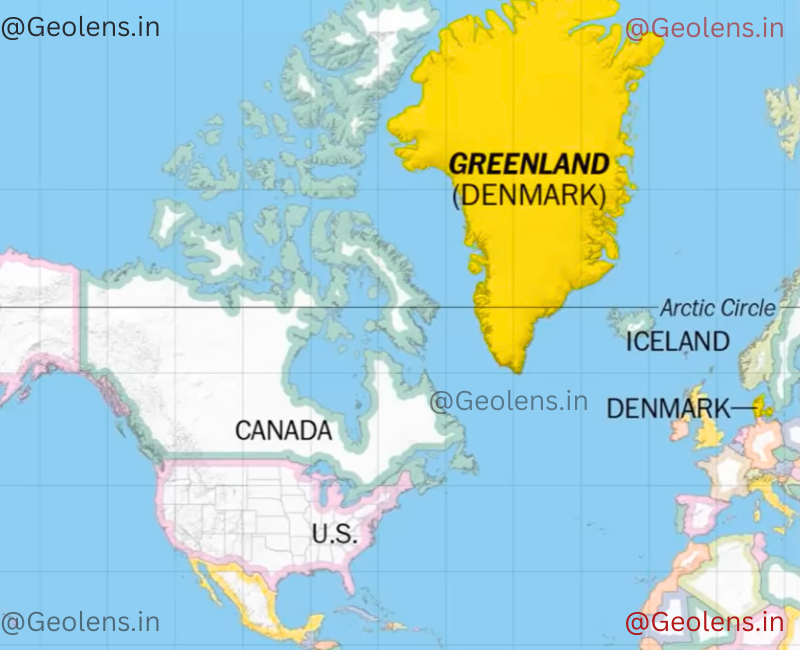
Greenland is the world’s largest island not classified as a continent. Despite a small population of roughly 56,000 people, it carries immense geopolitical weight.
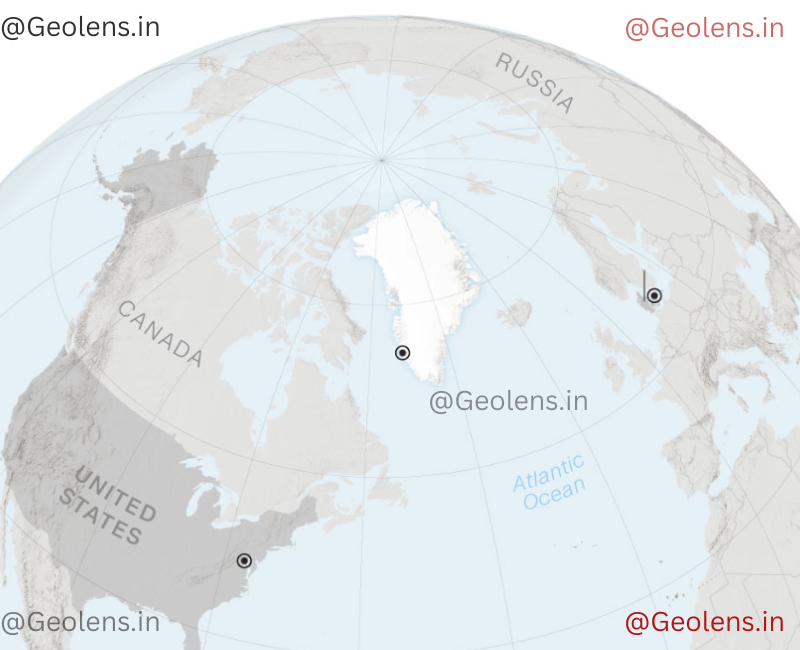
- Geography: Located between North America and Europe, Greenland acts as a natural gateway to the Arctic and the North Atlantic.
- Resources: Greenland holds 25 of the 34 minerals classified as critical for modern technology, including rare earth elements.
- Climate Change Factor: Melting ice sheets are making resource extraction and Arctic navigation increasingly feasible.
- Cold War Legacy: During the Cold War, the United States planned to deploy nuclear missiles on the island but abandoned the project due to engineering challenges and Danish opposition.
- Pituffik Space Base: Formerly known as Thule Air Base, this U.S.-operated facility has existed since World War II and remains crucial for missile warning and space surveillance.
- Political Status: Greenland is not independent. It is an autonomous territory within the Kingdom of Denmark.
- Denmark controls defense and foreign policy.
- Greenland controls internal governance and natural resources.
This combination of location, military relevance, and resource potential explains why Greenland repeatedly appears in U.S. strategic thinking.
#FPExplained: Danish leaders have warned the US that its soldiers will adopt a ‘shoot first and ask questions later’ approach in the event of an invasion. But what do we know about the country's armed forces?https://t.co/VeAfZAWV9A
— Firstpost (@firstpost) January 9, 2026
Why Trump Wants Greenland and Why It Is So Important: Strategically
Trump’s interest in Greenland was not impulsive. His reasoning followed a clear strategic pattern.
why Trump wants Greenland and why it is so important: Trump’s Core Calculations
- National Security: The Arctic is emerging as the next major military frontier.
- China Factor: Preventing China from investing in Greenland’s mining and infrastructure.
- Russia Factor: Countering Russia’s expanding Arctic militarization.
- Strategic Leverage: Ensuring long-term U.S. dominance over Arctic routes and security architecture.
Seen through this lens, why Trump wants Greenland and why it is so important becomes less about land acquisition and more about controlling the future balance of power in the Arctic.
Trump’s Greenland Ambition
Trump’s idea of acquiring Greenland was initially dismissed as eccentric. Yet, why Trump wants Greenland and why it is so important beneath the surface, the U.S. rationale was clear:
- National Security: Greenland’s location makes it a strategic Arctic frontier.
- Military Presence: The U.S. already operates the Thule Air Base in Greenland, a Cold War relic still vital for missile defense.
- Countering Rivals: China’s investments in Arctic infrastructure and Russia’s militarization of the polar region have heightened U.S. concerns.
Trump framed the acquisition as a way to secure America’s Arctic dominance, but Denmark saw it as a direct challenge to sovereignty.
why Trump wants Greenland and why it is so important: Critical Raw material in Greenland:
why Trump wants Greenland and why it is so important: A 2023 survey revealed that Greenland holds 25 out of 34 minerals classified as “ critical raw materials “ by the European commissions reported by Reuters. These minerals included key materials for batteries, such as graphite and lithium, as well as rare earth elements used in electric vehicles and wind turbines. However, the Greenland has imposed a ban on Oil and natural gas extraction due to environment concerns, the report said.
Greenland banned extraction of oil and natural gas for environmental reasons, and development of its mining sector has been snarled in red tape and opposition form Indigenous people. As a result, Greenland’s economy is largely dependent on fishing which makes up more than 95 % of its exports and on annual financial support from Denmark, which funds about half of the public budget.
But in recent years these has been increased interest in Greenland`s natural resource including mining for rare earth minerals, uranium and iron. Experts believe Greenland may hold vast reserves of oil and natural gas. As climate change accelerates the melting of its massive ice sheet, these resources are expected to become increasingly accessible for exploration and extraction.
Valuable mineral resource have been a key focus of Trump elsewhere in the world including in his dealing with Ukraine.
The U.S. president emphasized that adding another layer to why Trump wants Greenland and why it is so important in future energy politics..
He has also said that “ Greenland is covered with Russia and Chines ships all over the places”
Many of Trump`s fellow Republican lawmakers agree that US security is at risk from these two counties.
Category | Key Details |
Critical Raw Materials | Holds 25 out of 34 minerals classified as critical by the European Commission. |
Key Mineral Resources | Graphite, lithium (for batteries), rare earth elements (for EVs/wind turbines), uranium, and iron. |
Energy Reserves | Believed to hold vast reserves of oil and natural gas, though extraction is currently banned. |
Economic Profile | 95% of exports come from fishing; 50% of the public budget is funded by Denmark. |
Environmental Bans | Extraction of oil and natural gas is prohibited due to environmental concerns. |
Growth Constraints | Development is hindered by bureaucratic “red tape” and opposition from Indigenous people. |
Climate Change Impact | Melting ice sheets are making resources increasingly accessible for future exploration. |
U.S. Strategic View | Focus is on national security and countering Russian and Chinese naval presence in the region. |
Denmark’s Stern Response
why Trump wants Greenland and why it is so important, Denmark invoked its Cold War directive: “will Shoot first, ask questions later.” This blunt warning signaled that any attempt to annex Greenland would be treated as an act of war.
- Deterrence Strategy: Denmark fears creeping U.S. military control without formal annexation.
- NATO Dilemma: Both Denmark and the U.S. are NATO members. A U.S. attack on Greenland would fracture NATO credibility and unity.
- Historical Context: In 1952, Denmark issued standing orders to immediately engage invaders in Greenland, underscoring its seriousness.
#WATCH | On Greenland, US President Donald Trump says, "If we don't take Greenland, Russia or China will take Greenland. And I am not going let that happen. I'd love to make a deal with them (Greenland). It's easier. But one way or the other, we're gonna have Greenland..."… pic.twitter.com/7OlM7i9ueh
— ANI (@ANI) January 12, 2026
Scenario Analysis: What If the U.S. Pushes Further?
Below are the some important reason why Trump wants Greenland and why it is so important
- Military Escalation: Any aggressive U.S. move could trigger Denmark’s defense directive, risking direct confrontation.
- NATO Crisis: A clash between two NATO allies would undermine the alliance’s credibility, emboldening Russia and China.
- Resource Race: Control of Greenland’s minerals could tilt technological supremacy in favor of whoever dominates extraction.
- Greenland Independence: The island’s leaders reject annexation and emphasize self-determination. A U.S. push might accelerate Greenland’s drive for full independence from Denmark.
Counterarguments
- U.S. Perspective why Trump wants Greenland and why it is so important: Advocates argue that Greenland’s integration into U.S. territory would secure Arctic dominance and protect against Chinese and Russian encroachment.
- Danish Perspective: Denmark insists sovereignty cannot be negotiated, warning that U.S. ambitions threaten international law and NATO stability.
- Greenland’s Viewpoint: Greenlanders stress autonomy and reject being treated as a bargaining chip between superpowers.
Author’s Viewpoint
The reason why Trump wants Greenland and why it is so important, because the reaction missed the real danger. If the United States were to use force against Greenland, it would not remain a limited regional incident—it would risk triggering a multi-front global crisis.
An attack on Greenland would mean a direct clash with Denmark, a NATO member, instantly fracturing the alliance and creating chaos across Europe.
Russia and China would not sit idle; both would exploit such a breakdown to expand their own military and strategic positions, potentially opening multiple theaters of confrontation at once.
At the core of this risk lies a deeper and often ignored driver of U.S. behavior: The need to preserve the petrodollar system. The United States has historically reacted aggressively when countries attempt to bypass the U.S. dollar in global energy trade.
Venezuela is a clear example. When Caracas began conducting oil deals in local currencies and non-dollar arrangements, Washington responded—not by openly admitting economic motives, but by manufacturing justifications.
Claims of narco-terrorism, migration threats, preemptive self-defense, and “exhausted diplomacy” were used as cover narratives. The real objective was control over crude oil flows and the protection of dollar dominance.
Greenland fits into this same strategic mindset. Control over Arctic routes, critical minerals, and future energy resources strengthens U.S. leverage over the global economic system. Denmark’s “shoot first, ask questions later” warning is therefore not emotional posturing—it is a rational response to a pattern of behavior where economic dominance is enforced through military pressure. Greenland today stands at a dangerous intersection: great-power rivalry, dollar hegemony, climate-driven resource access, and the risk of being dragged into conflicts it never sought.
Conclusion
The reason why Trump wants Greenland and why it is so important because Greenland episode is not a diplomatic misunderstanding—it is a warning signal. If the United States were to attack or forcibly seize Greenland, the consequences would extend far beyond the Arctic.
Such an action could ignite a multi-front war, collapse NATO unity, embolden rival powers, and destabilize the global economic order. The precedent set in Venezuela shows how economic motives—especially the defense of the petrodollar—are often masked behind security and humanitarian justifications.
As climate change unlocks Arctic resources and trade routes, the temptation to assert control will only grow. Greenland is becoming a test case for the 21st century: whether powerful states can restrain themselves within international law, or whether economic dominance will continue to be enforced through force.
The collision of U.S. ambitions, Danish sovereignty, NATO credibility, and global currency politics makes Greenland one of the most dangerous flashpoints of the modern era. How this is handled will shape not just the Arctic—but the future stability of the world order itself.
Frequently Asked Questions (FAQ)
- Why Trump wants Greenland and why it is so important for global stability
Why Trump wants Greenland and why it is so important goes beyond territorial ambition. Any U.S. attempt to use force against Greenland would directly involve Denmark, a NATO member, risking alliance collapse and triggering a multi-front global crisis. The issue threatens not just Arctic stability but the broader international order. - How could a U.S. attack on Greenland lead to a multi-front war?
An attack on Greenland would immediately place the U.S. in conflict with Denmark and destabilize NATO. Russia and China would likely exploit this fracture to advance their own military objectives elsewhere, opening multiple theaters of confrontation simultaneously. - Why is the petrodollar linked to why Trump wants Greenland and why it is so important?
The United States has historically acted aggressively when its dollar dominance is threatened. Control over Greenland strengthens U.S. leverage over future Arctic energy routes and critical resources, reinforcing the petrodollar system. This mirrors past interventions, such as Venezuela, where economic motives were hidden behind security justifications. - Why did Denmark issue a “shoot first, ask questions later” warning
Denmark’s warning reflects a rational defensive response, not emotional posturing. Given historical U.S. behavior when economic dominance is challenged, Denmark views Greenland as vulnerable to coercive pressure and has chosen deterrence as its primary defense. - Why Trump wants Greenland and why it is so important for future energy politics?
As climate change unlocks Arctic resources, Greenland is becoming central to future energy access. Control over Arctic routes, minerals, and potential hydrocarbons strengthens long-term economic and strategic dominance, making Greenland a critical asset in global power competition.
People Also Ask (PPA)
- Why Trump wants Greenland and why it is so important in the context of NATO?
Greenland is strategically tied to NATO’s northern defense. A U.S. seizure would undermine alliance unity, expose NATO’s internal contradictions, and weaken its credibility against adversaries like Russia and China. - Could Greenland become the next Venezuela-style intervention?
While the contexts differ, the strategic logic is similar. In both cases, economic dominance—particularly energy control and currency leverage—plays a central role, often masked by security or humanitarian narratives. - Why is Greenland considered a global flashpoint rather than a regional issue?
Greenland sits at the intersection of Arctic militarization, global currency politics, resource competition, and alliance stability. Any conflict there would ripple across Europe, Asia, and global markets. - How does climate change intensify why Trump wants Greenland and why it is so important?
Melting ice makes Arctic shipping routes and resource extraction viable. This transformation turns Greenland from a remote territory into a strategic prize with long-term geopolitical consequences. - What happens if great powers fail to restrain themselves over Greenland?
Failure to respect sovereignty and international law could normalize force-driven economic dominance. Greenland may become the test case that determines whether global powers choose cooperation—or escalation—in the 21st century.
Pratik Kondawale
Strategist | Indian Defence & Global Affairs
Founder of GeoLens.in, Pratik writes in-depth analysis on India’s defence strategy, military tech, and global power shifts delivering sharp insights through an Indian lens.

“Will shoot first, ask questions later.” Why Trump wants Greenland and why it is so important ? In 2026
Why Trump wants Greenland and why it is so important goes far beyond a controversial proposal or diplomatic provocation. Greenland sits at the center of a rapidly militarizing Arctic, rich in critical minerals, emerging sea routes, and strategic military value.
Trump’s interest reflects deeper U.S. concerns over national security, Russian and Chinese Arctic expansion, and long-term control over resources that underpin global economic power. Denmark’s unusually harsh military warning shows this is not political theater but a genuine sovereignty crisis. As climate change unlocks Arctic access, Greenland has become a frontline in great-power rivalry, where a single miscalculation could fracture NATO, destabilize global markets, and reshape the world order.

Operation Absolute Resolve: How the U.S. Capture of Nicolás Maduro Reshaped Global Geopolitics
Operation Absolute Resolve marks one of the most controversial U.S. military actions in recent history. In January 2026, American forces reportedly captured Venezuelan President Nicolás Maduro and transferred him to U.S. custody, triggering global shock and debate. Officially justified by national security, narco-terrorism, and migration concerns, the operation is widely seen by analysts as driven by deeper geopolitical motives—especially Venezuela’s vast oil reserves and its alignment with U.S. rivals. This article examines how Operation Absolute Resolve unfolded, the legal and strategic risks it poses, global reactions, and what the crisis means for India and the future of international order.

India Is Surrounded by Unstable Neighbours — What are the Real Challenges and Opportunities Does This Create?
India Is Surrounded by Unstable Neighbours, a reality that is steadily shaping its strategic environment. Political turmoil, economic collapse, military dominance, and external interference across South Asia create constant pressure on India’s borders and internal security. Yet, this instability also forces New Delhi to adapt—by strengthening defence preparedness, expanding diplomatic influence, securing trade routes, and positioning itself as a stabilizing power in the region. This article examines the real challenges India faces and the strategic opportunities emerging from a volatile neighbourhood.

Tejas Crash at Dubai Air Show 2025 — A Tragedy, A Lesson, and A Call for Reform
The Tejas crash at the Dubai Air Show turned a moment of national pride into sudden heartbreak when Wing Commander Syal lost his life. This article unpacks the events of that day, explains why the Tejas crash matters for India’s defense readiness, and outlines the practical lessons and reforms needed to ensure the program recovers stronger. It also honors the pilot’s sacrifice and shows how the Tejas crash can become a catalyst for accountability, safer engineering, and faster delivery of operational jets.

Bangladesh EX-PM Sheikh Hasina Death Sentenced: Turmoil in Bangladesh and Rewired South Asian Politics
The Sheikh Hasina death sentenced verdict has detonated one of the most explosive political crises in Bangladesh’s modern history. Delivered in absentia by the International Crimes Tribunal, the ruling blames the former prime minister for orchestrating widespread state violence during the 2024 student protests. The decision has dismantled the Awami League’s long-standing dominance, pushed Bangladesh into a volatile power vacuum, and placed India in the middle of a diplomatic standoff. As questions about justice, political motivation, and regional stability collide, the fallout of this verdict is reshaping South Asian geopolitics in real time.

China with New Air Defence Near Pangong: A Silent Shift in Himalayan Power Balance
China’s new air defence near Pangong marks a major strategic escalation in the Himalayas. Satellite imagery reveals advanced HQ-9 missile systems, radar units, and fortified shelters aimed at asserting Chinese air dominance over eastern Ladakh. This development not only alters the regional military balance but also raises critical questions about India’s preparedness, response strategy, and the long-term implications for border security and geopolitical stability in South Asia.