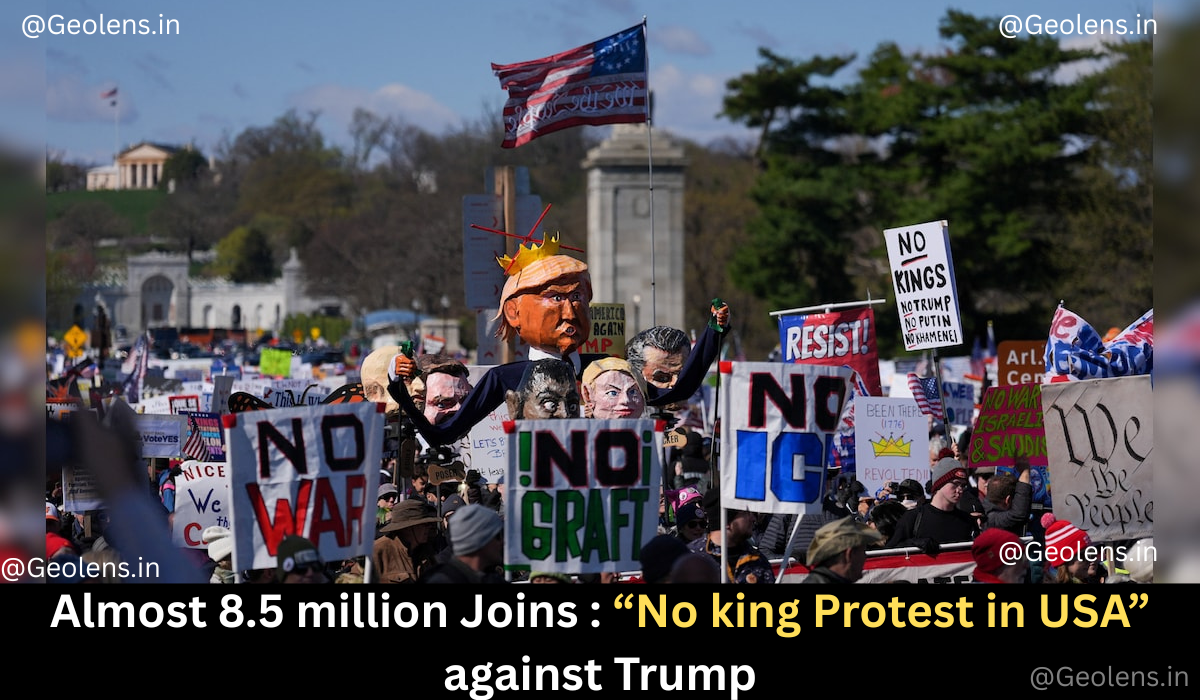
What Is “No King Protest in USA is All About?
At its core, the No King Protest in USA is a rejection of authoritarian tendencies. Protesters argue that Trump’s unilateral decisions, particularly regarding military escalation in Iran war undermine democratic checks and balances.
The slogan “No King” symbolizes resistance to the idea of a leader who rules without accountability, bypassing Congress, ignoring public opinion, and concentrating power in the executive branch.
The protests are also deeply tied to humanitarian concerns. The escalation in Iran has raised fears of a full-scale Middle East war, with devastating consequences for civilians, refugees, and global stability. Demonstrators see this as a reckless gamble that prioritizes power over peace.
How “No King Protest in USA” Breaks Down
The protests are decentralized, leaderless, and digitally coordinated. Unlike traditional movements led by a single figure or organization, the No King Protest in USA thrives on grassroots energy.
Civil rights groups, labour unions, student organizations, and anti-war coalitions have all joined forces, but no single entity controls the narrative.
- Scale: Over 8 million people worldwide.
- Spread: 3,000+ protests in US cities like New York, Los Angeles, Chicago, and Washington D.C.
- Global Reach: Major European cities—London, Berlin, Rome—have seen massive demonstrations in solidarity.
- Organization: Social media platforms, encrypted messaging apps, and grassroots networks have enabled rapid mobilization.
This breakdown shows the power of digital activism in the 21st century. Protesters can coordinate across borders, amplify messages instantly, and sustain momentum without centralized leadership.
Why “No King Protest in USA Breaks Down
The No King Protest in USA erupted due to a combination of domestic and international grievances:
- Iran War Escalation: US and Israeli strikes on Iran triggered fears of retaliation and regional instability.
- Economic Fallout: Oil supply disruptions have led to inflation, energy insecurity, and rising costs of living.
- Domestic Policies: Immigration crackdowns, minority targeting, and rollbacks on abortion and LGBTQ+ rights have fueled anger.
- Democratic Concerns: Trump’s use of executive power is seen as bypassing constitutional checks, eroding trust in institutions.
In Europe, the protests are driven by NATO ties and spillover risks. European nations fear refugee crises, terrorism, and economic instability resulting from US-led wars. Calls for diplomacy and strategic autonomy dominate European demonstrations.
'No, President Trump, we don't want you or any other king to rule us,' US Senator Bernie Sanders told a roaring crowd at the 'No Kings' rally in Washington, adding 'in America we, the people, will rule' https://t.co/UGId8OmeKG pic.twitter.com/k6NTnxjpnb
— Reuters (@Reuters) October 18, 2025
Who All Are Involved
The movement is diverse, cutting across social, political, and economic lines:
- Civil Rights Groups: Advocating for minority protections and democratic accountability.
- Labor Unions: Highlighting the economic consequences of war and inflation.
- Student Movements: Energized by digital activism and historical parallels to Vietnam-era protests.
- Grassroots Coalitions: Local communities organizing marches, sit-ins, and symbolic demonstrations.
- International Allies: European activists joining in solidarity, emphasizing global consequences of US policies.
This inclusivity makes the protest powerful. It is not limited to one demographic—it is a fusion of anti-war, pro-democracy, and social justice activism.
With over 8 million people and 3,000+ cities participating on March 28, 2026, estimates suggest the 'No King' was among the biggest single-day protests in US history.
— Li Jingjing 李菁菁 (@Jingjing_Li) March 29, 2026
But, crazy you have to look for it on TikTok, otherwise your fyp won’t show it. pic.twitter.com/ylQWo50Hh1
Counterarguments
Critics of the No King Protest in USA argue that:
- National Security: Military action in Iran is necessary to protect US interests and allies.
- Executive Power: The President must act decisively in times of crisis, even if it bypasses Congress.
- Economic Concerns: Some claim protests disrupt businesses and daily life, worsening economic instability.
- Political Bias: Opponents argue the movement is driven by partisan hostility rather than genuine democratic concerns.
While these counterarguments highlight legitimate debates, protesters counter that unchecked executive power is more dangerous than temporary disruption. They argue that democracy requires accountability, even in times of crisis.
Core Reasons for the: No King Protest in USA
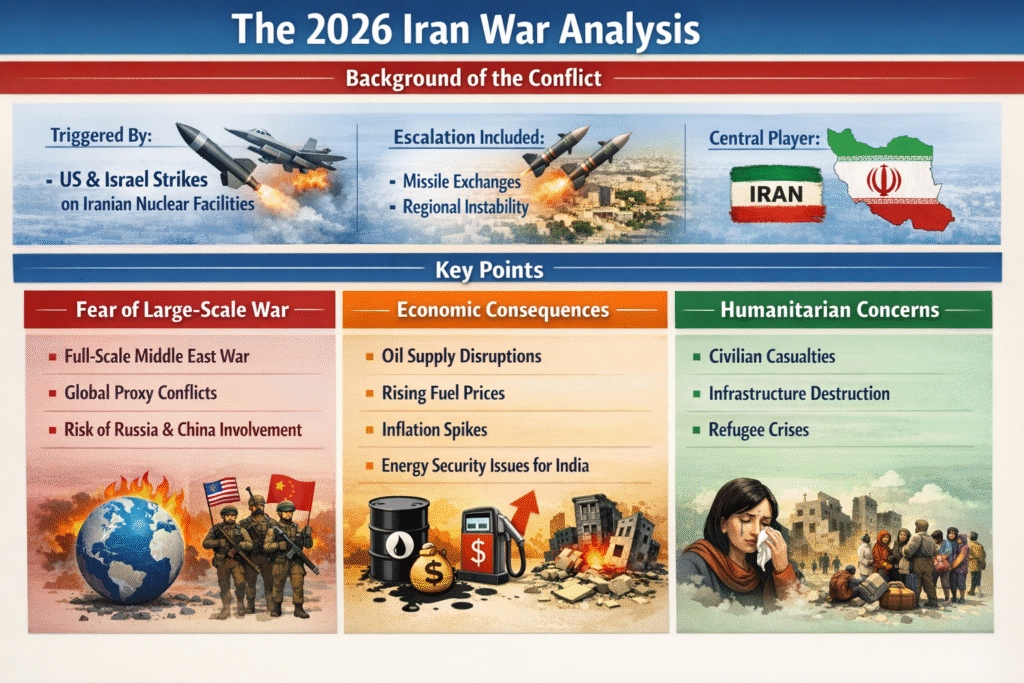
- The 2026 Iran war–
A. War triggered after– us Israel strikes on Iranian nuclear facilities
B. Escalation included: Missile exchange, regional instability across west Asia.
Why the war triggered protests
- Fear of large-scale war- (Full-scale middle east war,
proxy wars spreading globally, risk of – Involvement of Russia, China) - Economic consequences –(oil supply disruptions, rising fuel prices globally, inflation spikes)
- Humanitarian concerns –(Civilian casualties, Infrastructure destruction, refugee crises)
Also read about- India Is Surrounded by Unstable Neighbours — What are the Real Challenges and Opportunities Does This Create?
Author’s Viewpoint
From my perspective, the No King Protest in USA represents a historic moment of civic engagement. It is not merely about Trump or Iran—it is about the principle that no leader should act as a monarch in a democracy.
The protests echo the spirit of past movements against Vietnam and Iraq wars, reminding us that public resistance can shape policy.
The decentralized nature of the protest is both its strength and challenge. Without a single leader, it avoids co-optation, but sustaining momentum requires continuous digital coordination and grassroots energy.
Ultimately, the protests highlight a deeper truth: democracy is not self-sustaining. It requires active participation, vigilance, and resistance against authoritarian tendencies.
Conclusion
The No King Protest in USA is more than a reaction to war—it is a global movement defending democracy. With millions mobilized across continents, it signals a fusion of anti-war and pro-democracy activism. Whether or not it changes policy immediately, it has already reshaped the political conversation, reminding leaders that citizens will not accept authoritarianism quietly.
The protests may be compared to Vietnam and Iraq-era mobilizations, but they are uniquely digital, decentralized, and global. In an age where power can be concentrated rapidly, the people’s voice remains the ultimate check.
FAQ & PPA (People Also Ask)
Q1: What does “No King Protest in USA” mean?
It symbolizes resistance against authoritarianism, rejecting the idea of a leader who rules without accountability.
Q2: Why did the protests start?
They were triggered by Trump’s Iran war policies, economic fallout, and concerns about democratic erosion.
Q3: How many people are involved?
Over 8 million globally, with more than 3,000 protests in the US alone.
Q4: Are these protests only about foreign policy?
No. They also address domestic issues like immigration, minority rights, inflation, and social policy rollbacks.
Q5: Who organizes the protests?
They are decentralized, coordinated through grassroots networks and digital platforms.
Q6: What are the counterarguments?
Critics argue the protests disrupt daily life, undermine national security, and are politically biased.
Q7: How do these protests compare to past movements?
They echo Vietnam and Iraq-era protests but are uniquely digital and global in scale.
Q8: What is the future of the movement?
Its sustainability depends on continued grassroots energy, digital coordination, and political impact.

Pratik Kondawale
Strategist | Indian Defence & Global Affairs Founder of GeoLens.in, Pratik writes in-depth analysis on India’s defence strategy, military tech, and global power shifts delivering sharp insights through an Indian lens.