


Operation Absolute Resolve: How the U.S. Capture of Nicolás Maduro Reshaped Global Geopolitics

Facebook
Pinterest
LinkedIn
X
Threads
Reddit
WhatsApp
Telegram

Table of Contents

Introduction

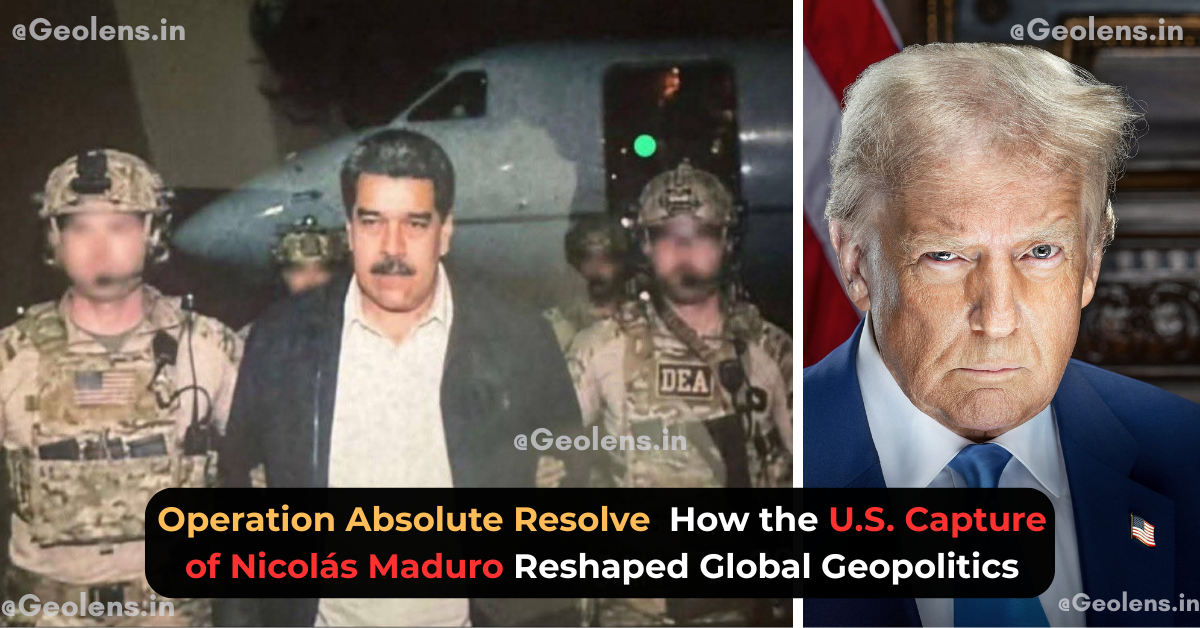
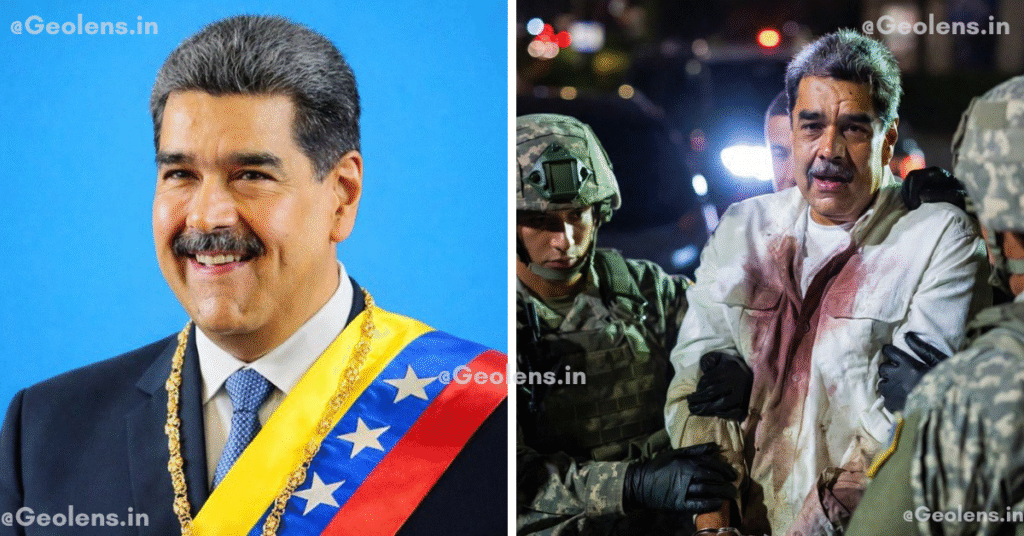
In early January 2026, global attention was abruptly drawn to Latin America after reports emerged that the United States had launched a covert yet decisive military mission in Venezuela, officially code-named Operation Absolute Resolve. According to U.S. government statements, American forces successfully captured Venezuelan President Nicolás Maduro and his wife during the operation and transported them to New York under U.S. custody.

The announcement triggered immediate shockwaves across diplomatic, military, and energy circles. Never in recent history had a sitting head of state been seized by another country’s armed forces and removed to foreign soil without United Nations authorization. While Washington framed Operation Absolute Resolve as a necessary act of national security, critics and analysts worldwide questioned the legality, motivation, and long-term consequences of such a move.

Beyond the stated justifications of crime prevention and border security, many observers argue that the true drivers behind Operation Absolute Resolve lie in Venezuela’s immense oil wealth and its strategic alignment with U.S. rivals such as Russia, China, and Iran. If so, the operation may mark a turning point in how great powers pursue geopolitical objectives in an increasingly unstable world order.

Venezuela’s Long Descent into Crisis

To understand Operation Absolute Resolve, it is essential to examine Venezuela’s prolonged crisis. Once among the wealthiest nations in Latin America, Venezuela’s economy was built almost entirely on oil exports. Mismanagement, corruption, falling oil prices, and overreliance on state control gradually hollowed out the economy.

After Hugo Chávez’s death in 2013, Nicolás Maduro inherited a deeply fragile system. His presidency was marked by disputed elections, international sanctions, hyperinflation, food and medicine shortages, and one of the largest migration crises in modern history. Millions of Venezuelans fled to neighboring countries and beyond, destabilizing regional economies and social systems.

Despite domestic unrest and international pressure, Maduro retained power through loyal security forces, political repression, and external backing. Over time, Venezuela evolved from an isolated state into a strategic partner of governments hostile to U.S. influence, cementing its position as a geopolitical flashpoint in the Western Hemisphere.

Escalating U.S. Pressure and Strategic Frustration

For more than a decade, Washington relied on sanctions, diplomatic isolation, and support for opposition figures to weaken Maduro’s rule. The U.S. imposed sweeping restrictions on Venezuela’s oil exports, financial system, and senior officials, expecting economic pressure to trigger political collapse.

That strategy failed. Maduro survived, sanctions hurt civilians more than elites, and Venezuela deepened cooperation with Russia, China, Iran, and Cuba. Russian military advisors, Chinese investments, Iranian fuel shipments, and Cuban intelligence support effectively insulated the regime.

From a U.S. strategic perspective, Venezuela transformed into a hostile platform near American borders—politically defiant, economically sanctioned, yet militarily protected by rival powers. Operation Absolute Resolve appears to have emerged from this accumulated frustration, signaling a shift from indirect pressure to direct action.

Operation Absolute Resolve: What Allegedly Happened

According to official briefings, Operation Absolute Resolve unfolded with speed and overwhelming force. On the night of the operation, residents in Caracas reported loud explosions, power disruptions, and unusual military activity near key installations.

Soon after, the U.S. President announced that American forces had successfully executed the mission and captured Nicolás Maduro and his wife. Though operational details remain classified, reports suggest the mission involved:

  • Coordinated air and naval strikes to neutralize air defenses
  • Cyber and electronic warfare to disrupt communications
  • Deployment of elite special forces units for rapid extraction
  • Immediate airlift of detainees to U.S. territory

The Pentagon described Operation Absolute Resolve as “precise, limited, and necessary.” However, comparisons were quickly drawn to earlier U.S. interventions, including the capture of Manuel Noriega in Panama in 1989 and regime-change campaigns in Iraq and Afghanistan.

Official U.S. Justifications

Washington presented Operation Absolute Resolve as the outcome of accumulated threats rather than an impulsive act. Four primary justifications were emphasized.

First, U.S. officials accused Maduro of leading or enabling narco-terrorism networks that facilitated large-scale cocaine trafficking into North America. The operation was framed as a strike against transnational criminal infrastructure rather than a conventional regime-change effort.

Second, the U.S. cited the Venezuelan migration crisis, claiming that criminal organizations exploited refugee flows to infiltrate U.S. borders. According to this argument, removing Maduro was necessary to stabilize migration routes and reduce security risks.

Third, Operation Absolute Resolve was justified under a doctrine of “preemptive self-defense,” asserting that emerging threats justified action before they fully materialized. This interpretation of international law remains highly controversial.

Finally, U.S. officials argued that sanctions and diplomacy had been exhausted. With negotiations stalled and Maduro entrenched, direct military action was presented as the only remaining option.

Operation Absolute Resolve

Oil, Energy, and the Deeper Strategic Motive

While official explanations focused on security and crime, most analysts believe the real motivation behind Operation Absolute Resolve lies in energy geopolitics. Venezuela possesses the world’s largest proven oil reserves, surpassing even Saudi Arabia. Control, influence, or access to these reserves carries enormous strategic weight.

By removing Maduro, Washington potentially gains leverage to reshape Venezuela’s oil sector, reintroduce Western energy companies, and weaken the influence of Russian and Chinese investments. In an era of global energy uncertainty, such control could help stabilize oil markets in favor of U.S. interests.

More importantly, it would deny rival powers a strategic foothold in the Western Hemisphere. From this perspective, Operation Absolute Resolve was not about Venezuela alone, but about maintaining U.S. dominance in global energy and geopolitical competition.

Post-Operation U.S. Plans for Venezuela

Reports indicate that Washington intends to oversee a transitional phase in Venezuela following Operation Absolute Resolve. Proposed measures allegedly include securing oil infrastructure, disarming pro-Maduro militias, restructuring state institutions, and organizing elections under international supervision.

This approach mirrors past U.S. interventions where military success was followed by political engineering. However, history suggests such transitions are rarely smooth. Local resistance, factional violence, and legitimacy deficits often undermine externally driven political change.

Strategic and Legal Challenges Ahead

Despite its immediate tactical success, Operation Absolute Resolve has opened a complex set of strategic, legal, and geopolitical challenges that the United States cannot easily control or contain.

At the core is the issue of legitimacy. The capture of a sitting head of state without United Nations authorization directly challenges established norms of sovereignty and international law. If such actions become acceptable precedent, the global order risks sliding toward a system where power overrides rules.

Inside Venezuela, the situation remains volatile. Removing Nicolás Maduro does not automatically dismantle the structures that sustained his rule. Loyalist military units, armed militias, and political hardliners may continue resistance, raising the risk of prolonged instability or even civil war.

Internationally, the backlash has already begun. Russia and China have condemned Operation Absolute Resolve as an act of imperial aggression, warning that it destabilizes the region and undermines global norms. Their response increases the risk of diplomatic retaliation and strategic counter-moves in other theaters.

Economic consequences are also emerging. Oil markets have reacted with volatility, a development that disproportionately affects energy-importing countries such as India. Any prolonged disruption in Venezuelan oil production or geopolitical escalation could further destabilize global energy prices.

Key challenges facing the U.S. include:

  • Legitimacy crisis: Absence of UN approval weakens legal justification and global acceptance.
  • Domestic Venezuelan resistance: Continued fighting by loyalist forces could trigger long-term instability.
  • Global backlash: Strong condemnation from Russia and China raises escalation risks.
  • Economic volatility: Oil price fluctuations impact global markets and import-dependent nations.
  • Legal disputes: International courts may challenge the legality of the operation, complicating U.S. claims.

In short, while Operation Absolute Resolve achieved its immediate objective, it has also exposed the U.S. to long-term strategic costs that extend far beyond Venezuela’s borders.

Global Reaction and Strategic Anxiety

Global responses to Operation Absolute Resolve have been sharply divided. Russia and China issued strong condemnations, warning of dangerous precedents. Latin American governments reacted cautiously, balancing sovereignty concerns with dissatisfaction toward Maduro’s rule.

European states expressed legal concerns while reiterating criticism of Venezuela’s governance. India adopted a neutral stance, issuing travel advisories and closely monitoring energy market impacts.

The broader anxiety lies in precedent. If powerful states openly capture foreign leaders under national security claims, the rules governing international conduct may fundamentally change.

What Operation Absolute Resolve Means for India

For India, Operation Absolute Resolve is not a distant Latin American event: it is a reminder of how quickly global power politics can disrupt energy security, international law, and strategic stability. India has no direct stake in Venezuela’s internal politics, but it is deeply exposed to the second- and third-order effects of such unilateral military actions.

The most immediate concern for India is energy security. India imports over 80 percent of its crude oil, making it highly vulnerable to global price volatility. Any instability involving Venezuela: home to the world’s largest proven oil reserves, has the potential to push global oil prices upward. Even short-term spikes translate into higher import bills, inflationary pressure, and stress on India’s fiscal balance.

Beyond energy, Operation Absolute Resolve raises serious questions for India about the erosion of international norms. India has traditionally supported principles of sovereignty, non-intervention, and rule-based international order largely because weaker and mid-sized powers benefit most from predictable rules. The unilateral capture of a sitting head of state without UN authorization sets a precedent that India views with caution, if not discomfort.

There is also a broader strategic concern. If major powers increasingly justify cross-border military actions under expansive interpretations of “national security” or “preemptive self-defense,” the global environment becomes more unstable. For India, which already faces complex security challenges in its own neighborhood, such precedents weaken the diplomatic and legal constraints that restrain unilateral aggression.

India’s Response: Strategic Caution, Not Alignment

India’s response to Operation Absolute Resolve has been deliberately measured. New Delhi has avoided taking sides or issuing emotionally charged statements, instead emphasizing stability, restraint, and the safety of civilians.

India’s key responses include:

  • Neutral diplomatic posture: India has refrained from endorsing or condemning the operation outright, signaling strategic autonomy rather than alignment with any bloc.
  • Travel and safety advisories: Indian authorities issued advisories urging citizens to avoid non-essential travel to Venezuela, prioritizing citizen safety over political signaling.
  • Energy market monitoring: India is closely tracking oil price movements and supply disruptions, prepared to adjust sourcing strategies if volatility persists.
  • Commitment to international law: While not confrontational, India has reiterated the importance of sovereignty and international norms in multilateral forums.

This approach reflects India’s broader foreign policy doctrine—pragmatic realism. New Delhi understands the power dynamics at play but has no incentive to legitimize actions that weaken international law, especially when such actions can later be used as justification elsewhere.

Strategic Takeaway for India

For India, Operation Absolute Resolve is less about Venezuela and more about the direction of global order. It reinforces the need for:

  • Diversified energy imports
  • Strategic oil reserves
  • Stronger multilateral institutions
  • Diplomatic flexibility in a fragmented world

India’s response shows restraint, not weakness. By avoiding knee-jerk reactions and focusing on national interests, New Delhi is signaling that it will not be drawn into great-power theatrics—but it is watching closely

Author’s Analytical Viewpoint

From a strategic standpoint, Operation Absolute Resolve reflects both American strength and strategic risk. It demonstrates unmatched military reach and decisiveness, yet undermines international norms that have restrained global chaos for decades.

For Venezuela, the possibility of political transition exists, but the path forward is unstable and uncertain. For the world, the lesson is stark: when oil, geopolitics, and power converge, sovereignty becomes negotiable.

Whether Operation Absolute Resolve leads to stability or sparks a new era of confrontation will define its place in history.

Conclusion

Operation Absolute Resolve stands as one of the most audacious U.S. actions of the 21st century. Framed as a response to crime, migration, and security threats, the operation appears deeply rooted in oil geopolitics and great-power rivalry.

While Washington may achieve short-term strategic gains, the long-term consequences remain uncertain. Legal challenges, regional instability, and global backlash could outweigh immediate success. History suggests that removing a leader is rarely the end of a conflict—it is often the beginning of a more complex and costly phase.

Frequently Asked Questions (FAQ)

  1. What is Operation Absolute Resolve?

    Operation Absolute Resolve
    is a U.S. military operation launched in January 2026 in Venezuela, during which American forces reportedly captured President Nicolás Maduro and transferred him to U.S. custody. The operation has been described as unprecedented and highly controversial.

  2. Why did the United States launch Operation Absolute Resolve?

    Officially, the U.S. cited national security concerns, narco-terrorism, illegal migration, and the failure of sanctions and diplomacy. However, many analysts argue that Venezuela’s vast oil reserves and its alignment with U.S. rivals were the real driving factors.

  3. Is Operation Absolute Resolve legal under international law?

    The legality of Operation Absolute Resolve is widely disputed. Capturing a sitting head of state without UN authorization raises serious questions about sovereignty, international law, and the principle of non-intervention.

  4. How does Operation Absolute Resolve impact global oil markets?

    Venezuela holds the world’s largest proven oil reserves. Any instability linked to Operation Absolute Resolve has the potential to disrupt supply chains, increase oil price volatility, and affect energy-importing countries worldwide.

  5. What is India’s position on Operation Absolute Resolve?

    India has adopted a cautious and neutral stance. It has emphasized stability, citizen safety, and respect for international norms while closely monitoring oil price movements and broader geopolitical consequences.

People Also Ask (PAA)

  1. Did the U.S. really capture Venezuelan President Nicolás Maduro?

    According to U.S. official statements, Nicolás Maduro was captured during Operation Absolute Resolve and transferred to American custody. However, the operation remains controversial, and independent verification is limited.

  2. Why is Venezuela so strategically important to the United States

    Venezuela is strategically important due to its massive oil reserves and its partnerships with Russia, China, and Iran. Control or influence over Venezuela affects global energy markets and regional power balance.

  3. How is Operation Absolute Resolve different from past U.S. interventions?

    Unlike previous interventions, Operation Absolute Resolve involved the direct capture of a sitting head of state without a prolonged invasion or UN mandate, making it far more legally and diplomatically contentious.

  4. Could Operation Absolute Resolve set a dangerous global precedent?

    Yes. If powerful nations justify unilateral military actions under broad “national security” claims, it weakens international norms and increases the risk of similar actions by other powers.

  5. How could Operation Absolute Resolve affect India’s economy?

    India may face indirect economic impacts through rising oil prices, increased import costs, inflationary pressure, and greater uncertainty in global energy markets.
Picture of Pratik Kondawale

Pratik Kondawale

Strategist | Indian Defence & Global Affairs

Founder of GeoLens.in, Pratik writes in-depth analysis on India’s defence strategy, military tech, and global power shifts delivering sharp insights through an Indian lens.

All Posts
Operation Absolute Resolve

Operation Absolute Resolve: How the U.S. Capture of Nicolás Maduro Reshaped Global Geopolitics

Operation Absolute Resolve marks one of the most controversial U.S. military actions in recent history. In January 2026, American forces reportedly captured Venezuelan President Nicolás Maduro and transferred him to U.S. custody, triggering global shock and debate. Officially justified by national security, narco-terrorism, and migration concerns, the operation is widely seen by analysts as driven by deeper geopolitical motives—especially Venezuela’s vast oil reserves and its alignment with U.S. rivals. This article examines how Operation Absolute Resolve unfolded, the legal and strategic risks it poses, global reactions, and what the crisis means for India and the future of international order.

Read More »

India Is Surrounded by Unstable Neighbours — What are the Real Challenges and Opportunities Does This Create?

India Is Surrounded by Unstable Neighbours, a reality that is steadily shaping its strategic environment. Political turmoil, economic collapse, military dominance, and external interference across South Asia create constant pressure on India’s borders and internal security. Yet, this instability also forces New Delhi to adapt—by strengthening defence preparedness, expanding diplomatic influence, securing trade routes, and positioning itself as a stabilizing power in the region. This article examines the real challenges India faces and the strategic opportunities emerging from a volatile neighbourhood.

Read More »
Tejas Crash

Tejas Crash at Dubai Air Show 2025 — A Tragedy, A Lesson, and A Call for Reform

The Tejas crash at the Dubai Air Show turned a moment of national pride into sudden heartbreak when Wing Commander Syal lost his life. This article unpacks the events of that day, explains why the Tejas crash matters for India’s defense readiness, and outlines the practical lessons and reforms needed to ensure the program recovers stronger. It also honors the pilot’s sacrifice and shows how the Tejas crash can become a catalyst for accountability, safer engineering, and faster delivery of operational jets.

Read More »

Bangladesh EX-PM Sheikh Hasina Death Sentenced: Turmoil in Bangladesh and Rewired South Asian Politics

The Sheikh Hasina death sentenced verdict has detonated one of the most explosive political crises in Bangladesh’s modern history. Delivered in absentia by the International Crimes Tribunal, the ruling blames the former prime minister for orchestrating widespread state violence during the 2024 student protests. The decision has dismantled the Awami League’s long-standing dominance, pushed Bangladesh into a volatile power vacuum, and placed India in the middle of a diplomatic standoff. As questions about justice, political motivation, and regional stability collide, the fallout of this verdict is reshaping South Asian geopolitics in real time.

Read More »
China’s New Air Defence Near Pangong

China with New Air Defence Near Pangong: A Silent Shift in Himalayan Power Balance

China’s new air defence near Pangong marks a major strategic escalation in the Himalayas. Satellite imagery reveals advanced HQ-9 missile systems, radar units, and fortified shelters aimed at asserting Chinese air dominance over eastern Ladakh. This development not only alters the regional military balance but also raises critical questions about India’s preparedness, response strategy, and the long-term implications for border security and geopolitical stability in South Asia.

Read More »
Afghanistan Pakistan war

Afghanistan Pakistan War 2025: Causes, Escalation, and India’s Strategic Advantage

The recent Afghanistan Pakistan war marks a dangerous escalation from border tensions to open state-level confrontation. What began with Pakistani airstrikes inside Afghan territory quickly spiraled into fierce Afghan retaliation, signaling Kabul’s newfound military assertiveness. This conflict exposes Pakistan’s growing vulnerabilities—diplomatic isolation, two-front pressure, and internal instability—while reshaping regional power equations.

For India, the turmoil presents both strategic opportunity and cautious optimism. A distracted Pakistan allows New Delhi to strengthen its influence in Afghanistan and consolidate regional partnerships. Meanwhile, the muted response from Gulf powers like Saudi Arabia and Qatar underscores Islamabad’s weakening alliances. As the Durand Line dispute reignites and media warfare intensifies, the Afghanistan Pakistan war stands as a defining moment in South Asia’s evolving geopolitical order—one that could tilt the balance of power in India’s favor.

Read More »

Leave a Comment