

Tejas Crash at Dubai Air Show 2025 — A Tragedy, A Lesson, and A Call for Reform

Facebook
X
WhatsApp
Threads
Email
Telegram
Reddit
LinkedIn

Synopsis

The Tejas crash at the Dubai Air Show turned a moment of national pride into sudden heartbreak when Wing Commander Syal lost his life. This article unpacks the events of that day, explains why the Tejas crash matters for India’s defense readiness, and outlines the practical lessons and reforms needed to ensure the program recovers stronger. It also honors the pilot’s sacrifice and shows how the Tejas crash can become a catalyst for accountability, safer engineering, and faster delivery of operational jets.

Table of Contents

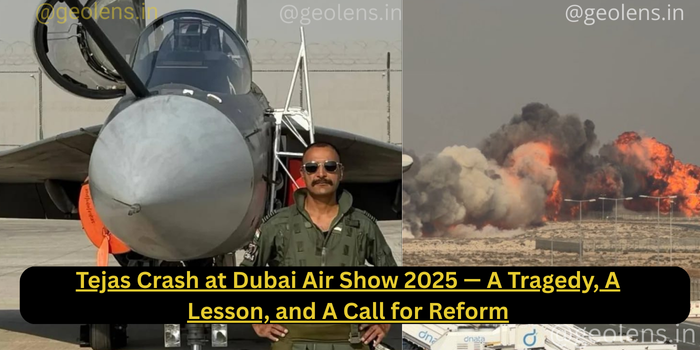
The Tejas crash during the Dubai Air Show on November 21, 2025, was more than a tragic accident. It was a public failure witnessed by defense experts, global media, foreign air forces, and international buyers — the exact audience India needed to impress. Instead of showcasing progress in indigenous combat aviation, the crash exposed vulnerabilities that India has been either ignoring or downplaying for years.

One pilot’s death turned into a moment of international doubt: Is India actually ready for self-reliance in strategic defense aviation, or is it pretending?

Wing Commander Namansh Syal, a highly experienced pilot and a symbol of the Indian Air Force’s elite capability, was the one flying that day. His loss is a direct consequence of a program that demands perfection from pilots but still suffers from technical, logistical, and structural weaknesses.

Introduction to Tejas Crash at Dubai Air Show 2025

India entered the Dubai Air Show 2025 expecting applause, global credibility, and new opportunities for defense exports. Instead, the world witnessed a Tejas crash — a defining failure that overshadowed years of effort behind the country’s indigenous fighter jet. One of India’s best pilots, Wing Commander Namansh Syal, lost his life in seconds, and with that loss came a hard dose of reality: ambition without flawless execution is not progress — it’s a liability.

The tragedy forced a question that India has tried to avoid for too long:
Is the Tejas program truly ready for frontline responsibility, or is India betting its national defense on a system still battling basic reliability issues?

A Few Fatal Seconds: How the Tejas Crash Unfolded

This wasn’t a mechanical failure that developed slowly. It was instantaneous.

During a negative-G dive into a barrel roll — a maneuver repeatedly practiced — the aircraft suddenly began losing altitude too quickly. The pilot initiated emergency corrections, but the Tejas did not respond adequately. Within seconds, the jet slammed into the ground and exploded, leaving no time or space for safe ejection.

The worst part? Spectators and cameras from all over the world watched the aircraft — India’s prized indigenous fighter — become a fireball in a matter of seconds. This is the kind of visual disaster that changes narratives and influences foreign procurement decisions.

The Tejas crash wasn’t just a tragedy. It was damaging optics on the world’s biggest aerospace stage.

Negative-G Maneuver Risks: A Harsh Reminder

Negative-G maneuvers may look impressive, but they come with brutal physiological effects:

  • Blood rushes to the head
  • Vision blurs or greys out
  • Spatial awareness suffers
  • Muscular control slows down

Even the best-trained pilots can be overwhelmed. In low-altitude displays, you don’t get a second chance. The Tejas crash proves that aerobatic showcases require absolute synergy between pilot reaction speed and aircraft responsiveness — and that synergy clearly wasn’t present that day.

Why Every Tejas Crash Hits India Harder than Others

India’s air defense strategy depends heavily on the success and mass deployment of Tejas. That’s not a marketing line — it’s a desperate necessity.

India needs 42 fighter squadrons to guard two hostile borders. Even today, we operate around 29 — and that number is decreasing as legacy jets retire. Every MiG-21 phased out leaves a major operational hole.

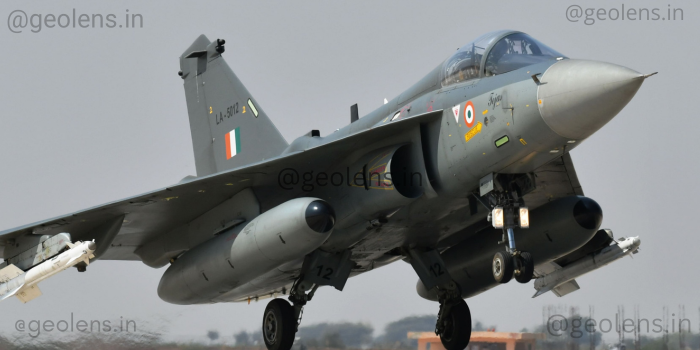
Tejas was designed to fill that gap, replace outdated jets, and reduce dependence on foreign suppliers. Every crash isn’t just a loss of hardware — it is a direct hit to national combat readiness and credibility. Other nations can afford such failures. India cannot.

Production Delays: HAL’s Output Is Now a National Security Problem

Tejas was inducted in 2016. Nearly a decade later:

  • Only 38 fighters are in service
  • 83 ordered in 2021 are delayed
  • HAL still operates like a slow bureaucratic workshop, not a wartime aerospace manufacturer

India doesn’t lack intelligence, ambition, or funding. It lacks urgency, accountability, and execution discipline.

If HAL continues at this pace, Tejas MK1A may become outdated by the time the full fleet is delivered.

A slow defense ecosystem equals a vulnerable nation.

Technical Weaknesses That Can’t Be Hidden Anymore

India’s narrative has been “Tejas is world-class.” But the truth is more complicated:

Issue

Impact

Underpowered engine (GE F404)

Lower thrust-to-weight → reduced agility in combat

Dependency on foreign avionics

Weakens true “Make in India” credibility

High pilot workload

Precision maneuvers demand exceptional skill at all times

Quality control challenges

Risks reliability during intense operations

Limited variants available today

Slower modernization of the IAF fleet

Tejas MK1 was intended as a stepping stone — but that stepping stone itself must first be stable.

The Tejas crash proved that the stability isn’t consistent yet.

Foreign Dependence: Reality vs. Self-Reliance Hype

India keeps promoting “Atmanirbharta,” but reality looks like this:

  • American engines
  • Foreign radars and EW systems
  • Delayed / failed indigenous Kaveri engine program (₹2100+ crore spent)

India does not have the luxury of depending on the U.S. or Europe for critical components during a war.
Sanctions and export blocks are real threats.

One Tejas crash forces us to confront the truth — India is only partially independent in defense aviation.

Comparison hurts — but necessary harsh truths do:

Country

Fighter Strength

Trend

China

200–250 advanced jets, including stealth

Rapid growth

Pakistan

Continuous upgrades with China’s support

Upward

India

Squadron deficit, slow modernization

Downward risk

While India holds press conferences about future jets, China deploys them.

Rivals are progressing faster than India is producing.

The Tejas crash intensifies this strategic disadvantage.

Human Loss: Training Investment That Can’t Be Replaced

A fighter pilot isn’t a replaceable asset like a car engine. Training a Wing Commander-level pilot takes:

  • 5+ years of structured training
  • Thousands of flight hours
  • Operational combat readiness certifications
  • Years of strategic, tactical, and instructional experience

Replacing a jet is expensive. Replacing a pilot like Syal is almost impossible.

The human cost of the Tejas crash is a direct blow to operational strength — not just emotional sentiment.

Global Crashes Happen — But India Suffers More

It’s a fact:

  • F-35 — multiple crashes despite top-tier funding
  • J-20 — testing failures still common
  • Russian jets — aging fleets crash regularly

But here’s the critical difference:

Those nations have depth.
India does not.

They lose jets → They build more.
India loses jets → We struggle to fill basic squadron needs.

Patriotic excuses won’t fix that.

The Real Root Causes: Culture, Accountability, and Weak Pressure

India’s aerospace sector suffers from three chronic diseases:

1️⃣ Too much bureaucracy — decisions crawl
2️⃣ Too little accountability — failures are tolerated
3️⃣ Too much celebration — small milestones are hyped irresponsibly

India celebrates prototypes.
Other nations celebrate squadron deployment.

If India keeps praising incomplete progress, the results will continue to be incomplete — and pilots will continue to pay the price.

One Tejas crash should shake the nation out of this comfortable delusion.

Lessons India Must Accept — Not Just Announce

✔ Set ruthless performance standards
✔ Reduce political influence over technical decisions
✔ Bring private sector competition into fighter manufacturing
✔ Accelerate MK1A, MK2 with zero compromise
✔ Re-evaluate air show risk profiles — lives > marketing
✔ Punish delay and defects, reward delivery and quality

Self-reliance doesn’t come from slogans.
It comes from pressure, consequences, deadlines, and discipline.

The Path Ahead: India Must Decide What It Really Wants

This Tejas crash is not the end of the program — but it must mark the end of complacency.

India has shown it can do the impossible — a Mars mission at first attempt, a Moon landing in a hostile region.
So building a reliable fighter aircraft is fully achievable — but only if:

  • Engineering replaces politics
  • Discipline replaces excuses
  • Speed replaces celebration

India is at a turning point. The choice is simple:

➤ Build indigenous fighters that the world respects
or
➤ Remain permanently dependent on foreign powers in times of war

A fighter jet program defines a nation’s ability to defend itself.
Tejas will either become the backbone of India’s skies — or another delayed dream file collecting dust in DRDO archives.

The cost of choosing wrong has already been witnessed in Dubai — in flames, in smoke, and in the loss of a pilot who deserved better from the system he served.

Author’s Viewpoint

The Tejas Crash at the Dubai Air Show must be viewed as a pivotal moment rather than an isolated accident. While the aircraft has represented India’s aspirations for indigenous defense capability, this incident underscores the urgent need to reassess the pace, priorities, and structural challenges surrounding the Tejas program. The objective is not to criticize for the sake of criticism, but to ensure that safety, reliability, and long-term operational success remain uncompromised.

 A crash of this magnitude demands complete transparency in the investigation process, technical accountability from every stakeholder involved, and a willingness to confront uncomfortable truths within India’s aerospace development ecosystem. Tejas is a national asset, and any weaknesses revealed through this tragedy must be treated with seriousness, not defensive denial.

This event also presents India with an important strategic opportunity. The loss of Wing Commander Syal cannot simply be acknowledged with ceremonial words; it must translate into tangible improvements that honour his contribution to India’s aviation future. The Tejas project should now evolve with a renewed commitment to operational excellence — faster decision-making, stronger collaboration between HAL, DRDO, and the Indian Air Force, and accelerated upgrades that enhance combat readiness.

India must ensure that the lessons learned here shape the development of Tejas Mk1A, Mk2, and every future version with a more rigorous approach to testing, pilot safety, and real-world performance. If pursued diligently, this tragedy can become the turning point that transforms Tejas from a promising fighter into a globally respected platform built on resilience, precision, and continuous innovation.

Ultimately, I believes that India is at a crossroads. The Tejas program is far too important to allow setbacks to erode confidence or derail progress. Instead, this moment calls for maturity — to recognize flaws without discouragement, to reform without delay, and to commit to excellence without exceptions. Wing Commander Syal’s sacrifice must serve as a reminder that the pursuit of indigenous air power comes with responsibility — responsibility to every pilot who flies Tejas, every soldier who depends on it, and every citizen who believes in India’s ability to build world-class defense technology. The only fitting tribute is a future where Tejas succeeds not because it is Indian-made, but because it is genuinely one of the best in the sky.

Final Word: The Tejas Crash Must Be a Line in the Sand

The Tejas crash at Dubai wasn’t just an accident — it exposed the cracks in India’s defense establishment that have been ignored too long. Either India fixes those cracks today, or one day those cracks will define India’s fate in a real war — not an air show.

If India wants respect on the world stage, it must first respect the responsibility of building world-class aviation. Tejas must evolve — immediately — into a jet that protects the flag, not one that forces the nation to defend its shortcomings.

This program is too important to fail. And too costly to keep failing.
The future of India’s skies depends on whether bold action finally replaces comfortable excuses.

Picture of Pratik Kondawale

Pratik Kondawale

Strategist | Indian Defence & Global Affairs

Founder of GeoLens.in, Pratik writes in-depth analysis on India’s defence strategy, military tech, and global power shifts delivering sharp insights through an Indian lens.

All Posts

“Will shoot first, ask questions later.” Why Trump wants Greenland and why it is so important ? In 2026

Why Trump wants Greenland and why it is so important goes far beyond a controversial proposal or diplomatic provocation. Greenland sits at the center of a rapidly militarizing Arctic, rich in critical minerals, emerging sea routes, and strategic military value.

Trump’s interest reflects deeper U.S. concerns over national security, Russian and Chinese Arctic expansion, and long-term control over resources that underpin global economic power. Denmark’s unusually harsh military warning shows this is not political theater but a genuine sovereignty crisis. As climate change unlocks Arctic access, Greenland has become a frontline in great-power rivalry, where a single miscalculation could fracture NATO, destabilize global markets, and reshape the world order.

Read More »
Operation Absolute Resolve

Operation Absolute Resolve: How the U.S. Capture of Nicolás Maduro Reshaped Global Geopolitics

Operation Absolute Resolve marks one of the most controversial U.S. military actions in recent history. In January 2026, American forces reportedly captured Venezuelan President Nicolás Maduro and transferred him to U.S. custody, triggering global shock and debate. Officially justified by national security, narco-terrorism, and migration concerns, the operation is widely seen by analysts as driven by deeper geopolitical motives—especially Venezuela’s vast oil reserves and its alignment with U.S. rivals. This article examines how Operation Absolute Resolve unfolded, the legal and strategic risks it poses, global reactions, and what the crisis means for India and the future of international order.

Read More »

India Is Surrounded by Unstable Neighbours — What are the Real Challenges and Opportunities Does This Create?

India Is Surrounded by Unstable Neighbours, a reality that is steadily shaping its strategic environment. Political turmoil, economic collapse, military dominance, and external interference across South Asia create constant pressure on India’s borders and internal security. Yet, this instability also forces New Delhi to adapt—by strengthening defence preparedness, expanding diplomatic influence, securing trade routes, and positioning itself as a stabilizing power in the region. This article examines the real challenges India faces and the strategic opportunities emerging from a volatile neighbourhood.
Read More »
Tejas Crash

Tejas Crash at Dubai Air Show 2025 — A Tragedy, A Lesson, and A Call for Reform

The Tejas crash at the Dubai Air Show turned a moment of national pride into sudden heartbreak when Wing Commander Syal lost his life. This article unpacks the events of that day, explains why the Tejas crash matters for India’s defense readiness, and outlines the practical lessons and reforms needed to ensure the program recovers stronger. It also honors the pilot’s sacrifice and shows how the Tejas crash can become a catalyst for accountability, safer engineering, and faster delivery of operational jets.

Read More »

Bangladesh EX-PM Sheikh Hasina Death Sentenced: Turmoil in Bangladesh and Rewired South Asian Politics

The Sheikh Hasina death sentenced verdict has detonated one of the most explosive political crises in Bangladesh’s modern history. Delivered in absentia by the International Crimes Tribunal, the ruling blames the former prime minister for orchestrating widespread state violence during the 2024 student protests. The decision has dismantled the Awami League’s long-standing dominance, pushed Bangladesh into a volatile power vacuum, and placed India in the middle of a diplomatic standoff. As questions about justice, political motivation, and regional stability collide, the fallout of this verdict is reshaping South Asian geopolitics in real time.
Read More »
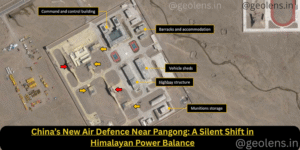
China’s New Air Defence Near Pangong

China with New Air Defence Near Pangong: A Silent Shift in Himalayan Power Balance

China’s new air defence near Pangong marks a major strategic escalation in the Himalayas. Satellite imagery reveals advanced HQ-9 missile systems, radar units, and fortified shelters aimed at asserting Chinese air dominance over eastern Ladakh. This development not only alters the regional military balance but also raises critical questions about India’s preparedness, response strategy, and the long-term implications for border security and geopolitical stability in South Asia.

Read More »

Leave a Comment