

What Is Rudra Brigade, Bhairav Battalions: India’s Future-Ready Military Units in 2025

In a significant stride towards modernizing its armed forces, the Indian Army has unveiled two pioneering formations: the Rudra Brigade and Bhairav Battalions. These units are central to India’s strategy of enhancing combat readiness and operational efficiency along its borders with China and Pakistan.

Facebook
X
LinkedIn
Reddit
WhatsApp
Threads

Table of Contents

What Is Rudra Brigade & Bhairav Battalions?

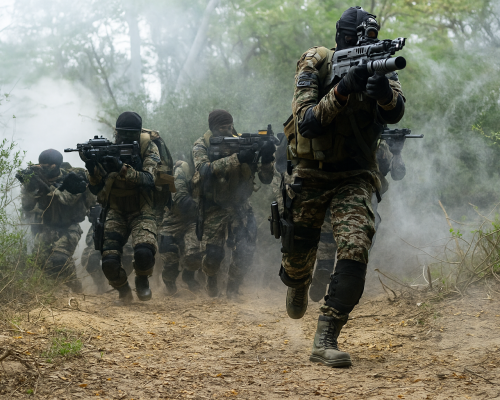
The Rudra Brigade is a new-generation integrated combat unit of the Indian Army designed for modern, high-speed warfare. Unlike traditional brigades that focus on a single type of force (like infantry or artillery), the Rudra Brigade brings together all combat elements into one powerful formation, including

  • Infantry (foot soldiers)
  • Mechanized units (like BMPs and ICVs)
  • Armored tanks Artillery guns
  • Combat engineers Special Forces
  • Drone and surveillance units
  • Logistics and medical support

    This structure allows a Rudra Brigade to operate independently, respond quickly to threats, and carry out joint operations without waiting for backup from other commands. Think of it as a “mini-army” that’s self-sufficient, high-tech, and ready to strike fast — especially along volatile borders.:
Rudra Brigade

The Bhairav Battalion is a light commando force created to support the Rudra Brigades and carry out specialized missions. These battalions are:

  • Highly mobile
  • Trained for high-risk operations
  • Capable of deep strikes, reconnaissance, sabotage, and anti-terror missions.

    They’re modeled on elite forces like Para SF and Ghatak Platoons but are lighter, faster, and more versatile in high-altitude and border conditions — especially along the China (LAC) and Pakistan (LoC) frontiers.

Why Rudra Brigade and Bhairav Battalions Units are Important?

The formation of the Rudra Brigades stems from the need to adapt to the evolving nature of warfare, characterized by rapid mobilization, technological integration, and multi-domain operations. Traditional single-arm brigades were limited in flexibility and response time. By consolidating various combat elements into a single formation, the Rudra Brigades aim to:

  • Enhance operational agility
  • Improve real-time decision-making Facilitate swift
  • Deployment along critical frontiers
  • Strengthen deterrence through integrated firepower

Together, the Rudra Brigades and Bhairav Battalions represent a major evolution in India’s defense doctrine: Built for multi-domain warfare (land, air, cyber, drones), Capable of quick deployment in conflict zones. Perfectly suited for future conflicts where speed, tech, and coordination matter more than numbers.

The Rudra Brigade and Bhairav Battalions are poised to bring significant positive changes to India’s military capabilities. Here are some key improvements we can expect from their formation:

1. Enhanced Operational Agility
The integration of multiple combat arms (infantry, armor, artillery, drones) within the Rudra Brigade will make Indian forces much more agile. This all-arms structure will allow for quicker decision-making and faster response times during conflict situations, reducing reliance on separate specialized units.

2. Strategic Mobility
The Rudra Brigades’ self-sufficiency and quick deployment abilities will allow India to respond rapidly to threats, especially along high-altitude borders like Ladakh and the LoC with Pakistan. This mobility ensures India can maintain a strong deterrent against adversaries and counteract any sudden escalations.

3. Increased Deterrence on Multiple Fronts
The combined capabilities of Rudra Brigades and Bhairav Battalions will strengthen deterrence by providing India with a multi-domain force capable of striking swiftly in both conventional and asymmetrical warfare scenarios. This will send a strong message to potential adversaries about India’s preparedness and ability to defend its borders effectively.

4. Improved Special Operations
The Bhairav Battalions, with their light commando structure, will enhance India’s special operations capabilities. Their specialized training will make them more effective in counter-terrorism and specialized strikes against high-value targets in border regions and urban warfare zones.

5. Technological Superiority
With the integration of drones, UAVs, and precision-guided munitions, the Rudra Brigades will leverage cutting-edge technology for real-time intelligence and targeted strikes. This technological edge will allow Indian forces to conduct operations with greater accuracy and minimal collateral damage.

6. Stronger Border Security
India’s borders with China and Pakistan are among the most strategically sensitive. The Rudra Brigades’ ability to quickly mobilize forces along the LAC and LoC will enhance India’s border security posture, especially in disputed and high-tension areas.

7. Operational Flexibility and Independence
These new formations will have the flexibility to conduct independent operations without waiting for coordination from other units, reducing reaction times and enabling faster deployment of force.

8. Psychological Impact and Moral Boost
The establishment of these elite forces will have a psychological impact not just on adversaries, but also on the morale of India’s soldiers. The increased readiness and capability will foster a strong sense of confidence among troops and create a robust defense culture.

These positive changes will not only bolster India’s defense capabilities but also enable the country to be more assertive in the face of global security challenges. The formation of Rudra Brigades and Bhairav Battalions signifies India’s commitment to maintaining a technologically advanced, ready, and responsive military force.

India's Readiness in Future Warfare

India’s defense strategy is increasingly centered on preparing for future warfare scenarios that demand high mobility, advanced technology, and seamless integration across military domains. Key developments include:

  • Drone Integration: Every infantry battalion is being equipped with dedicated drone platoons for surveillance, reconnaissance, and precision strikes.
  • Precision Weaponry: The successful test of UAV-Launched Precision Guided Missiles (ULPGM-V3) enhances India’s capability for targeted engagements with minimal collateral damage.
  • Logistical Advancements: Emphasis on efficient resource delivery and management, as highlighted during Operation Sindoor, underscores the critical role of logistics in modern combat.
  • Air Defense Systems: Deployment of systems like “Akashteer” provides comprehensive airspace monitoring and threat neutralization capabilities.

Operational Capabilities on Borders

The Rudra Brigades and Bhairav Battalions significantly bolster India’s defensive and offensive operations along its borders:

Enhanced Mobility: Integrated units can rapidly respond to threats, reducing reaction time during border skirmishes.
Superior Firepower: The combination of various combat elements within a single brigade ensures a formidable presence capable of deterring adversaries.
Strategic Deployment: The establishment of infrastructure like the Nyoma airfield in Ladakh facilitates swift troop and equipment movement in high-altitude regions.
Specialized Operations: Bhairav Battalions, as light commando units, are adept at conducting high-impact missions, including reconnaissance and targeted strikes, enhancing India’s tactical versatility.

Conclusion: India’s Bold Step Toward Next-Gen Warfare

The formation of Rudra Brigades and Bhairav Battalions marks a decisive shift in India’s military doctrine—one that embraces technology, speed, and multi-domain integration. These future-ready units are not just symbolic upgrades; they are battlefield game-changers designed to operate autonomously in fast-evolving threat environments.

As India faces increasing strategic pressure across both the western and eastern borders, these elite formations provide the Indian Army with unmatched operational flexibility, swift deployment, and high-impact combat capability. Whether it’s deterring hostile incursions along the LAC or responding to asymmetric threats at the LoC, Rudra and Bhairav units are built for the conflicts of tomorrow—today.

With this transformation, India isn’t just modernizing its forces; it’s reshaping the future of warfare in South Asia. Also read about project Vishnu DRDO`s latest development in hypersonic cruise missile. 

Operation Sindoor will be in NCERT Class 3-12 books

Ministry of Education will soon be featured Operation Sindoor, Shubhanshu Shukla’s, Mission LiFE , more across NCERT textbooks for Classes 3 to 12.
Picture of Pratik Kondawale

Pratik Kondawale

Strategist | Indian Defence & Global Affairs

Founder of GeoLens.in, Pratik writes in-depth analysis on India’s defence strategy, military tech, and global power shifts delivering sharp insights through an Indian lens.

All Posts

“Will shoot first, ask questions later.” Why Trump wants Greenland and why it is so important ? In 2026

Why Trump wants Greenland and why it is so important goes far beyond a controversial proposal or diplomatic provocation. Greenland sits at the center of a rapidly militarizing Arctic, rich in critical minerals, emerging sea routes, and strategic military value.

Trump’s interest reflects deeper U.S. concerns over national security, Russian and Chinese Arctic expansion, and long-term control over resources that underpin global economic power. Denmark’s unusually harsh military warning shows this is not political theater but a genuine sovereignty crisis. As climate change unlocks Arctic access, Greenland has become a frontline in great-power rivalry, where a single miscalculation could fracture NATO, destabilize global markets, and reshape the world order.

Read More »
Operation Absolute Resolve

Operation Absolute Resolve: How the U.S. Capture of Nicolás Maduro Reshaped Global Geopolitics

Operation Absolute Resolve marks one of the most controversial U.S. military actions in recent history. In January 2026, American forces reportedly captured Venezuelan President Nicolás Maduro and transferred him to U.S. custody, triggering global shock and debate. Officially justified by national security, narco-terrorism, and migration concerns, the operation is widely seen by analysts as driven by deeper geopolitical motives—especially Venezuela’s vast oil reserves and its alignment with U.S. rivals. This article examines how Operation Absolute Resolve unfolded, the legal and strategic risks it poses, global reactions, and what the crisis means for India and the future of international order.

Read More »

India Is Surrounded by Unstable Neighbours — What are the Real Challenges and Opportunities Does This Create?

India Is Surrounded by Unstable Neighbours, a reality that is steadily shaping its strategic environment. Political turmoil, economic collapse, military dominance, and external interference across South Asia create constant pressure on India’s borders and internal security. Yet, this instability also forces New Delhi to adapt—by strengthening defence preparedness, expanding diplomatic influence, securing trade routes, and positioning itself as a stabilizing power in the region. This article examines the real challenges India faces and the strategic opportunities emerging from a volatile neighbourhood.

Read More »
Tejas Crash

Tejas Crash at Dubai Air Show 2025 — A Tragedy, A Lesson, and A Call for Reform

The Tejas crash at the Dubai Air Show turned a moment of national pride into sudden heartbreak when Wing Commander Syal lost his life. This article unpacks the events of that day, explains why the Tejas crash matters for India’s defense readiness, and outlines the practical lessons and reforms needed to ensure the program recovers stronger. It also honors the pilot’s sacrifice and shows how the Tejas crash can become a catalyst for accountability, safer engineering, and faster delivery of operational jets.

Read More »

Bangladesh EX-PM Sheikh Hasina Death Sentenced: Turmoil in Bangladesh and Rewired South Asian Politics

The Sheikh Hasina death sentenced verdict has detonated one of the most explosive political crises in Bangladesh’s modern history. Delivered in absentia by the International Crimes Tribunal, the ruling blames the former prime minister for orchestrating widespread state violence during the 2024 student protests. The decision has dismantled the Awami League’s long-standing dominance, pushed Bangladesh into a volatile power vacuum, and placed India in the middle of a diplomatic standoff. As questions about justice, political motivation, and regional stability collide, the fallout of this verdict is reshaping South Asian geopolitics in real time.
Read More »
China’s New Air Defence Near Pangong

China with New Air Defence Near Pangong: A Silent Shift in Himalayan Power Balance

China’s new air defence near Pangong marks a major strategic escalation in the Himalayas. Satellite imagery reveals advanced HQ-9 missile systems, radar units, and fortified shelters aimed at asserting Chinese air dominance over eastern Ladakh. This development not only alters the regional military balance but also raises critical questions about India’s preparedness, response strategy, and the long-term implications for border security and geopolitical stability in South Asia.

Read More »

1 thought on “What Is Rudra Brigade, Bhairav Battalions: India’s Future-Ready Military Units in 2025”

Leave a Comment