
Table of Contents
Mosquitoes are no longer limited to households; they have now become a matter of national security.
Pratik Kondawale Tweet
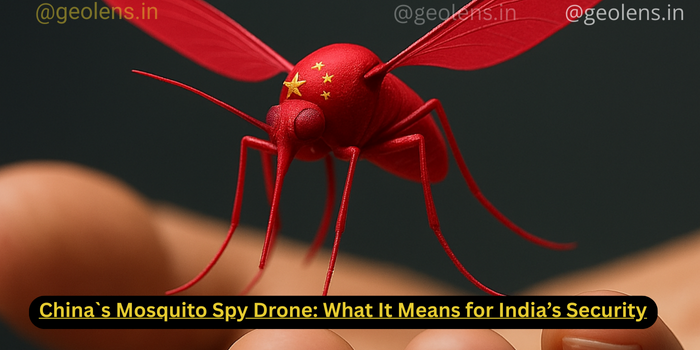
In a jaw-dropping leap of surveillance technology, China`s mosquito spy drone makes a headlines, a miniature machine so small and lifelike, it could easily blend into your surroundings without anyone ever noticing. Such spy drone Designed to look and fly like an ordinary insect, this cutting-edge creation has sparked a wave of concern across global security circles, especially in India.
As spy drone warfare evolves from battlefield skies to your very living room, this mosquito-like UAV (Unmanned Aerial Vehicle) may represent more than just a tech innovation—it could be the next silent threat in modern espionage.
But how real is the danger? Who built it and why?
And more importantly, is India prepared for this invisible invasion? Let’s break down the facts, the tech, and the national security challenges that this drone brings to India and beyond.
What Is China`s Mosquito Spy Drone?
The project has been developed by Chinese defense contractors working in close collaboration with:
- PLA (People’s Liberation Army) research units Institutions specializing in AI, robotics
- micro-electromechanical systems (MEMS)
This drone, created by the National University of Defense Technology (NUDT)
How China`s Mosquito Spy Drone work? The Technical Reality
These micro-drones aim to replicate insect flight using:
- Lightweight carbon or polymer body frames
- Nano-circuit boards with cameras and audio sensors
- Artificial wings powered by piezoelectric motors that flap like real insects
- Real time communication chips connected to satellites or ground stations
But—there are serious technical limitations:
| Challenge | Reality |
|---|---|
| Battery Life | Typically less than 20–30 minutes |
| Environmental Stability | Easily disrupted by wind, rain, or temperature changes |
| Signal Loss | Range is limited, especially in remote or signal-jammed zones |
| Durability | Fragile—can break if it collides or crashes |
| Payload | Cannot carry weapons—limited to sensors or small data tools |
These limitations mean they’re not combat-capable—but extremely effective for spying, especially in urban or indoor environments.
Why Should India Be concerned with China`s mosquito spy drone?
India shares a long and tense border with China, especially in Ladakh and Arunachal Pradesh region. The introduction of near-invisible China’s spy drone adds a new layer of threat:
- They could be used to spy on Indian military bases or troop movements
- SSB centers, DRDO labs, and ISRO facilities could become vulnerable to surveillance
- Counter-drone radars may not detect these insect-sized UAVs
- These drones could eavesdrop during defense meetings or even penetrate secure buildings via open windows
- India’s existing drone defense systems are more effective against larger UAVs like quadcopters or kamikaze drones but not micro-drones that mimic mosquitoes.
What Is India’s Response on China`s mosquito spy drone?
India has not yet released an official statement regarding this development.
However: Agencies like DRDO, NTRO, and RAW are likely monitoring these advancements closely, India is working on its own micro-UAV systems under programs like ‘SWiFT’(Stealth Wing Flying Testbed) and ‘Mini Rustom’. The Indian Army has been testing anti-drone jammers, though they are mainly for bigger drones.
Experts have called for: Increased investment in anti-micro drone tech, like optical detection systems, infrared monitoring, and high-frequency radar Creating a dedicated unit under DRDO for nano drone threat analysis Running simulation drills at sensitive installations to prepare for these types of intrusions
How Can India Stay Ahead from China`s Mosquito spy drone
To stay secure in this emerging battlefield, India must:
- Upgrade surveillance countermeasures: Traditional radars won’t work. India needs laser detection grids, AI-powered visual tracking, and infrared sensor arrays.
- Enhance Indo-Israeli cooperation: Israel has strong anti-drone capabilities which India can adopt or co-develop.
- Boost R&D in bio-mimetic defense tech: Compete head-to-head in developing micro and nano drones, not just defense against them.
- Build a national drone threat intelligence unit: Integrate data from the Army, Navy, Air Force, DRDO, and police to analyze and respond quickly to drone threats.
- Regulate private drone usage: Stricter drone laws will help prevent external actors from using drones to assist foreign surveillance efforts
Conclusion: A Silent Threat with Loud Implications
The unveiling of China’s mosquito-sized spy drone isn’t just a scientific marvel it’s a wake-up call. As surveillance tech shrinks and becomes increasingly undetectable, the line between civilian space and military interest blurs dangerously.
For India, the challenge is twofold: staying ahead of such innovations and fortifying its defenses against microscopic threats. These tiny machines may be hard to see, but their impact on national security, privacy, and diplomacy is massive.
To ensure sovereignty in the digital age, India must invest in counter-drone technology, policy regulation, and surveillance intelligence. Because in the wars of tomorrow, even a mosquito might be carrying a camera and or weapons.
FAQ: China’s Mosquito-Sized Spy Drone
- What is China`s mosquito spy drone?
It’s a micro-sized UAV designed to resemble and mimic a mosquito in appearance and flight. It’s developed for covert surveillance and can potentially collect audio, video, and environmental data. - Who developed this mosquito drone in China?
Reports suggest the drone has been designed by a Chinese defense-linked research institute. Exact attribution may vary, but it’s likely part of China’s expanding investment in advanced surveillance tech. - Is this drone already being used?
There is no official confirmation of its deployment, but its public reveal indicates that China may already be field-testing the technology. - Why is this a concern for India?
Given India’s strategic rivalry with China, the use of undetectable surveillance drones could compromise military zones, border areas, or sensitive infrastructure. - Can India defend against such micro drones?
India is developing anti-drone systems, but defending against micro-sized UAVs poses new challenges. Radar invisibility, size, and insect-like movement make detection extremely difficult without advanced sensors and AI-based tracking. - What should India do now? India must strengthen its cybersecurity, counter-drone tech, and surveillance protocols, while also engaging in global dialogues on drone warfare ethics and rules.
Find out why INA and New Delhi. decided not to go with Third Aircraft Carrier: what it means for the future navy.
“No” Third Aircraft Carrier: What It Means for the Future Indian Navy
Pratik Kondawale
Strategist | Indian Defence & Global Affairs
Founder of GeoLens.in, Pratik writes in-depth analysis on India’s defence strategy, military tech, and global power shifts delivering sharp insights through an Indian lens.

“Will shoot first, ask questions later.” Why Trump wants Greenland and why it is so important ? In 2026
Why Trump wants Greenland and why it is so important goes far beyond a controversial proposal or diplomatic provocation. Greenland sits at the center of a rapidly militarizing Arctic, rich in critical minerals, emerging sea routes, and strategic military value.
Trump’s interest reflects deeper U.S. concerns over national security, Russian and Chinese Arctic expansion, and long-term control over resources that underpin global economic power. Denmark’s unusually harsh military warning shows this is not political theater but a genuine sovereignty crisis. As climate change unlocks Arctic access, Greenland has become a frontline in great-power rivalry, where a single miscalculation could fracture NATO, destabilize global markets, and reshape the world order.

Operation Absolute Resolve: How the U.S. Capture of Nicolás Maduro Reshaped Global Geopolitics
Operation Absolute Resolve marks one of the most controversial U.S. military actions in recent history. In January 2026, American forces reportedly captured Venezuelan President Nicolás Maduro and transferred him to U.S. custody, triggering global shock and debate. Officially justified by national security, narco-terrorism, and migration concerns, the operation is widely seen by analysts as driven by deeper geopolitical motives—especially Venezuela’s vast oil reserves and its alignment with U.S. rivals. This article examines how Operation Absolute Resolve unfolded, the legal and strategic risks it poses, global reactions, and what the crisis means for India and the future of international order.

India Is Surrounded by Unstable Neighbours — What are the Real Challenges and Opportunities Does This Create?
India Is Surrounded by Unstable Neighbours, a reality that is steadily shaping its strategic environment. Political turmoil, economic collapse, military dominance, and external interference across South Asia create constant pressure on India’s borders and internal security. Yet, this instability also forces New Delhi to adapt—by strengthening defence preparedness, expanding diplomatic influence, securing trade routes, and positioning itself as a stabilizing power in the region. This article examines the real challenges India faces and the strategic opportunities emerging from a volatile neighbourhood.

Tejas Crash at Dubai Air Show 2025 — A Tragedy, A Lesson, and A Call for Reform
The Tejas crash at the Dubai Air Show turned a moment of national pride into sudden heartbreak when Wing Commander Syal lost his life. This article unpacks the events of that day, explains why the Tejas crash matters for India’s defense readiness, and outlines the practical lessons and reforms needed to ensure the program recovers stronger. It also honors the pilot’s sacrifice and shows how the Tejas crash can become a catalyst for accountability, safer engineering, and faster delivery of operational jets.

Bangladesh EX-PM Sheikh Hasina Death Sentenced: Turmoil in Bangladesh and Rewired South Asian Politics
The Sheikh Hasina death sentenced verdict has detonated one of the most explosive political crises in Bangladesh’s modern history. Delivered in absentia by the International Crimes Tribunal, the ruling blames the former prime minister for orchestrating widespread state violence during the 2024 student protests. The decision has dismantled the Awami League’s long-standing dominance, pushed Bangladesh into a volatile power vacuum, and placed India in the middle of a diplomatic standoff. As questions about justice, political motivation, and regional stability collide, the fallout of this verdict is reshaping South Asian geopolitics in real time.

China with New Air Defence Near Pangong: A Silent Shift in Himalayan Power Balance
China’s new air defence near Pangong marks a major strategic escalation in the Himalayas. Satellite imagery reveals advanced HQ-9 missile systems, radar units, and fortified shelters aimed at asserting Chinese air dominance over eastern Ladakh. This development not only alters the regional military balance but also raises critical questions about India’s preparedness, response strategy, and the long-term implications for border security and geopolitical stability in South Asia.
2 thoughts on “China`s Mosquito Spy Drone: What It Means for India’s Security”