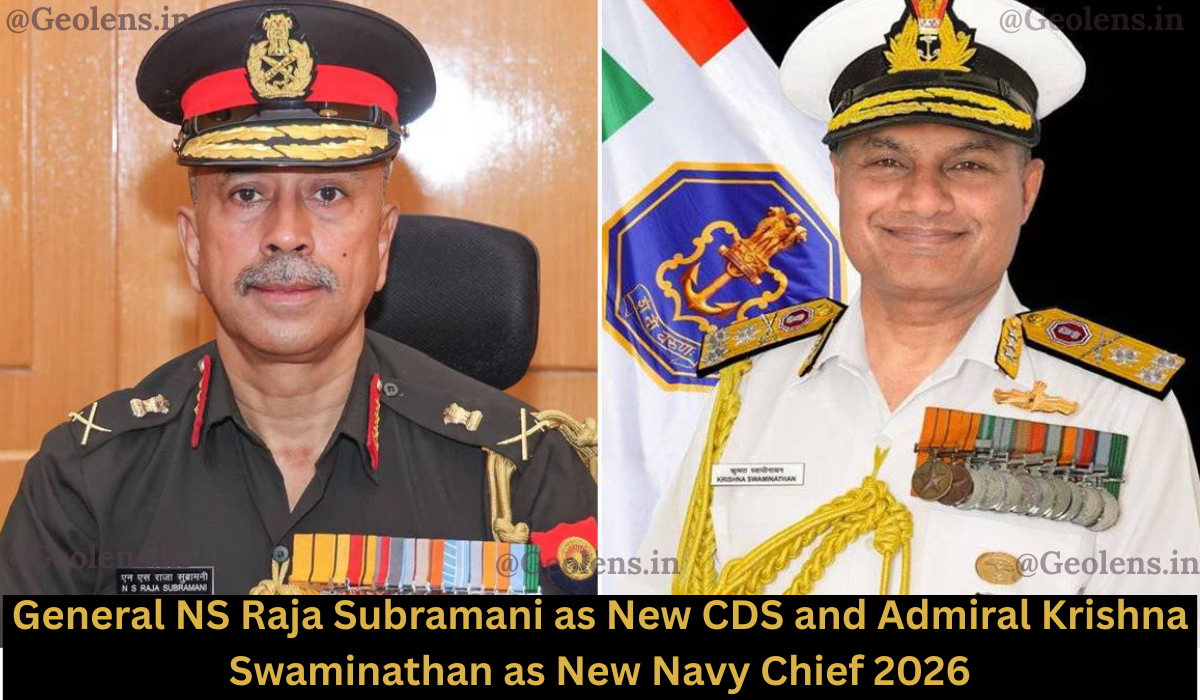
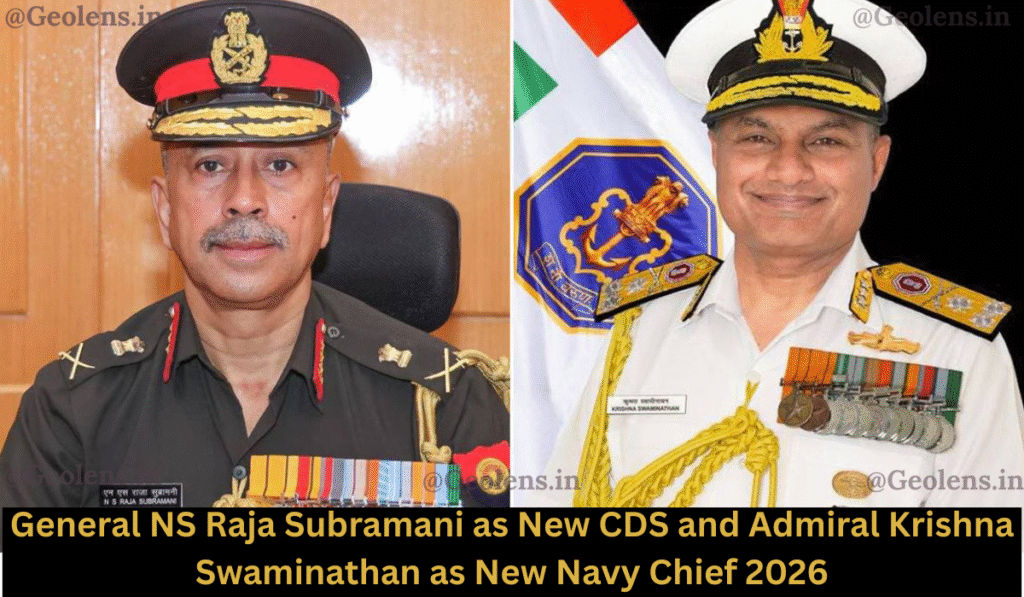
New CDS & New Navy Chief : On Sunday, India experienced a major shift in its military leadership. General NS Raja Subramani officially started his term as the nation’s new Chief of Defence Staff (CDS), taking over from General Anil Chauhan, who retired the day before. At the same time, the Navy saw a change in command, with Admiral Krishna Swaminathan stepping into the role of Chief of Naval Staff (CNS), following Admiral Dinesh K Tripathi, who completed his term on the same day.
This is a major reorganisation aimed at combining the Army, Navy, and Air Force into unified commands to improve efficiency and readiness for modern warfare. This article delves into the importance of these appointments, the background and duties of the CDS role, the selection process, and the powers and responsibilities of the position.
By the end of this, you will understand why this transition matters not only for the Indian military but also for its global strategic outlook.
These appointments are not simple administrative moves; they occur at a critical moment in India’s defence reforms. The armed forces are currently working on implementing theaterisation, a long-awaited structural change meant to unify the Army, Navy, and Air Force under single commanders for future conflicts.
The outgoing CDS, General Chauhan, played a key role in guiding the military through this transformation, leaving behind a legacy of service and integration. The new CDS, General Subramani, is expected to speed up the formation of joint services commands. These commands would bring together personnel, equipment, and operations from all three services under one commander.
This reform aims to remove redundancies, improve coordination, and enable quicker responses during emergencies. General Chauhan recently submitted a detailed proposal to the Defence Minister outlining the theaterisation model.
This plan involves setting up three major theatre commands: – A Northern Theatre Command based in Lucknow, with a focus on China. – A Western Theatre Command located in Jaipur, with a focus on Pakistan. – A Maritime Theatre Command in Thiruvananthapuram, dedicated to protecting India’s interests in the Indian Ocean region. General Subramani, who graduated from the National Defence Academy (NDA) and the Indian Military Academy (IMA), was commissioned into the Garhwal Rifles in December 1985. He is the third Army officer to hold the position of CDS, following Generals Bipin Rawat and Anil Chauhan.
Meanwhile, Admiral Krishna Swaminathan brings a distinguished career shaped by training at leading institutions such as the NDA, the Joint Services Command and Staff College in the UK, the College of Naval Warfare in Karanja, and the US Naval War College in Rhode Island. His tenure coincides with India’s efforts to complete a multi-billion-dollar project to build next-generation conventional submarines domestically. This initiative will
Who is the Chief of Defence Staff (CDS)?
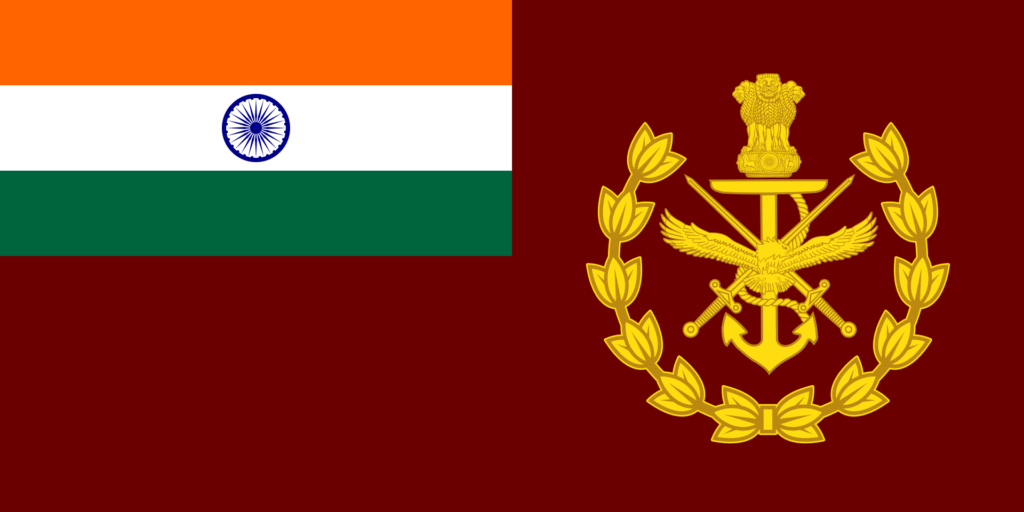
The Chief of Defence Staff is the highest-ranking military officer in India, created to serve as a single-point military advisor to the government. Unlike the individual service chiefs (Army, Navy, Air Force), the CDS is tasked with ensuring jointness and integration across all three services.
Key Features of the CDS Role:
- Principal Military Advisor: Advises the Prime Minister and Defence Minister on military matters.
- Head of Department of Military Affairs (DMA): A new department within the Ministry of Defence created in 2020.
- Promoter of Theaterisation: Oversees the creation of integrated theatre commands.
- Rank: Four-star general, equivalent to service chiefs, but with wider responsibilities.
The CDS is not just a ceremonial head; it is a transformational role designed to break silos between services and prepare India for joint operations in future wars.
How is the CDS Selected?
The selection of the CDS is a carefully considered process, balancing seniority, experience, and strategic vision.
Selection Process:
- Eligibility: Any serving or retired four-star general from the Army, Navy, or Air Force.
- Government Decision: The appointment is made by the Cabinet Committee on Appointments, chaired by the Prime Minister.
- Criteria Considered:
- Operational experience in commanding large formations.
- Exposure to joint operations and international military cooperation.
- Strategic acumen and ability to drive reforms.
General NS Raja Subramani’s appointment reflects these criteria. His career spans decades of service, beginning with his commissioning into the Garhwal Rifles in 1985, and includes leadership roles that prepared him for this responsibility.
Why Did India Need a CDS?
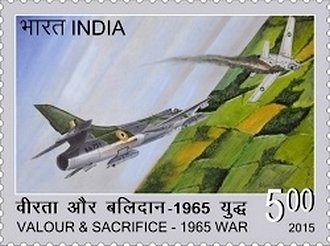
The demand for a CDS dates back to the Indo-Pak War of 1965. During that conflict, India’s armed forces operated in silos — the Army, Navy, and Air Force planned and executed operations independently, leading to coordination gaps.
Lessons from 1965:
- Lack of unified command led to delays in decision-making.
- Resources were not optimally deployed.
- Intelligence sharing was fragmented.
The Kargil War of 1999 further reinforced the need for a CDS. The Kargil Review Committee, headed by K. Subrahmanyam, recommended the creation of a single-point military advisor. After years of debate, the post was finally established in 2019, with General Bipin Rawat becoming the first CDS.
Powers and Responsibilities of the CDS
The CDS wields significant authority, but the role is also carefully balanced to avoid overshadowing the service chiefs.
Major Responsibilities:
- Jointness in Operations: Ensuring the Army, Navy, and Air Force work seamlessly together.
- Theaterisation: Establishing integrated theatre commands (Northern, Western, Maritime).
- Procurement Oversight: Prioritising acquisitions to avoid duplication across services.
- Military Diplomacy: Representing India in international military forums.
- Personnel Policies: Standardising training, promotions, and doctrines across services.
Limitations:
- The CDS does not command troops directly in combat.
- Service chiefs retain operational control of their respective forces.
- The CDS focuses on integration, planning, and advising.
General NS Raja Subramani: Profile of the New CDS
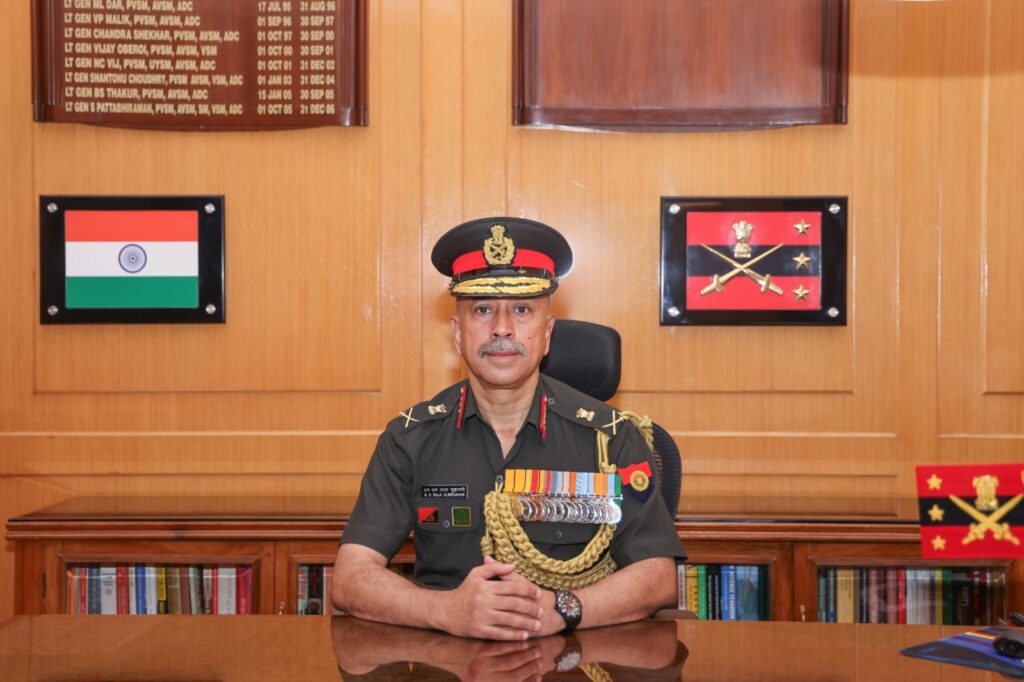
- Commissioned: 1985, Garhwal Rifles.
- Education: National Defence Academy (Khadakwasla), Indian Military Academy (Dehradun).
- Career Highlights:
- Commanded infantry battalions and formations in sensitive border areas.
- Served in staff roles shaping policy and strategy.
- Known for his emphasis on modernization and jointness.
Subramani is the third CDS from the Army, after General Bipin Rawat and General Anil Chauhan. His tenure is expected to accelerate theaterisation reforms, especially the establishment of China-centric Northern Theatre Command (Lucknow), Pakistan-centric Western Theatre Command (Jaipur), and Maritime Theatre Command (Thiruvananthapuram).
Admiral Krishna Swaminathan: Profile of the New Navy Chief
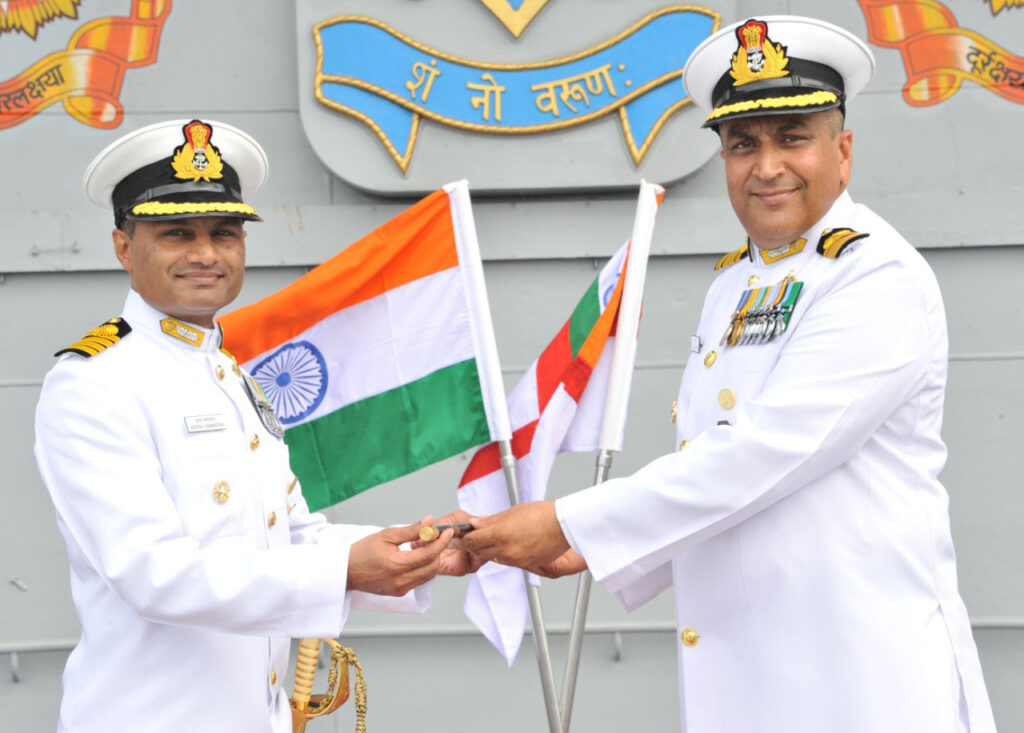
- Education: NDA, Joint Services Command and Staff College (UK), College of Naval Warfare (Karanja), US Naval War College (Rhode Island).
- Career Highlights:
- Specialist in submarine warfare.
- Key role in India’s indigenous submarine program.
- Experience in international naval cooperation.
His tenure coincides with India’s push to build next-generation conventional submarines domestically, a multi-billion-dollar project critical for maritime security.
Theaterisation: The Reform Agenda
Theaterisation is the most ambitious reform in India’s military history.
What is Theaterisation?
- Definition: Integration of Army, Navy, and Air Force assets under unified theatre commands.
- Objective: Improve coordination, reduce duplication, and enhance combat effectiveness.
Proposed Commands:
- Northern Theatre Command (Lucknow): Focused on China.
- Western Theatre Command (Jaipur): Focused on Pakistan.
- Maritime Theatre Command (Thiruvananthapuram): Focused on Indian Ocean security.
This reform mirrors practices in countries like the United States and China, where unified commands have proven effective in modern warfare.
Also read about- Also read about- Types of Missiles in India
Legacy of General Anil Chauhan
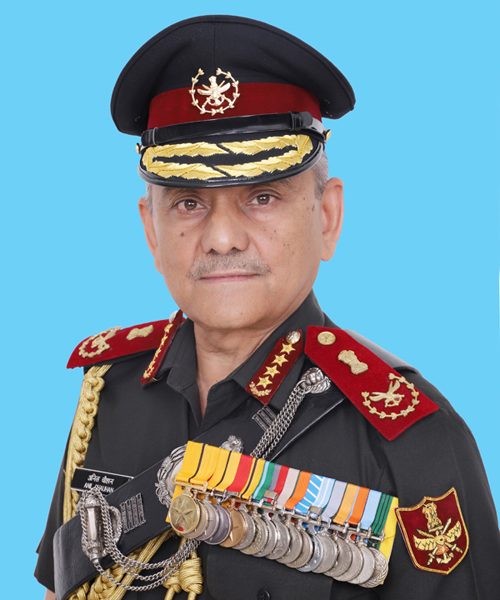
General Chauhan’s tenure as CDS was marked by:
- Advancing theaterisation proposals.
- Strengthening joint training and doctrines.
- Enhancing India’s military diplomacy.
He leaves behind a legacy of integration and transformation, paving the way for his successor.
Strategic Implications of the New Appointments
- For India’s Defence: Greater focus on jointness and modernization.
- For Regional Security: Stronger deterrence against China and Pakistan.
- For Global Role: Enhanced ability to contribute to international coalitions and peacekeeping.
Also read about- Agni 6: India’s Gateway to the Next Era of Strategic Deterrence
Author’s Viewpoint
India’s defence leadership transition is more than a ceremonial change of guard — it is a reflection of the country’s evolving military philosophy. The appointment of General NS Raja Subramani as the new Chief of Defence Staff and Admiral Krishna Swaminathan as Navy Chief signals continuity with reform, and reform with responsibility.
The CDS post itself was born out of hard lessons from past wars, where fragmented planning and lack of jointness exposed vulnerabilities. Today, as India faces a complex security environment shaped by China’s assertiveness, Pakistan’s unpredictability, and the fluid dynamics of the Indo‑Pacific, the CDS is no longer just an advisor — it is the architect of integration.
Subramani’s challenge will be to translate the idea of theaterisation into operational reality, ensuring that India’s armed forces fight as one cohesive unit rather than three parallel streams.
Admiral Swaminathan’s elevation, meanwhile, comes at a time when maritime security is central to India’s strategic calculus. With the Indian Ocean becoming a contested space, his stewardship of the Navy will be critical in balancing deterrence with diplomacy, and indigenous capability with global cooperation.
Together, these appointments underscore India’s intent: to modernize without losing balance, to integrate without erasing service identities, and to prepare for tomorrow’s wars without forgetting yesterday’s lessons. The New CDS and New Navy Chief are not just military leaders; they are custodians of India’s strategic future. Their success will be measured not only in battles won but in reforms institutionalized, doctrines harmonized, and credibility enhanced.
Ultimately, this transition is a reminder that leadership in defence is not about individuals alone — it is about vision, continuity, and the courage to reshape institutions for the challenges ahead.
Conclusion
The appointment of General NS Raja Subramani as CDS and Admiral Krishna Swaminathan as Navy Chief marks a turning point in India’s defence journey. These leaders are expected to drive reforms that will shape the future of India’s military for decades.
The CDS role, born out of lessons from past wars, is now central to India’s defence strategy. With theaterisation on the horizon, India is moving towards a leaner, integrated, and more effective military structure.
Frequently Asked Questions (FAQ) on New CDS and New Navy Chief
- Who is India’s New CDS? General NS Raja Subramani has been appointed as India’s new Chief of Defence Staff (CDS), succeeding General Anil Chauhan.
- Who is the New Navy Chief of India? Admiral Krishna Swaminathan has taken charge as the new Navy Chief, replacing Admiral Dinesh K Tripathi.
- Why are the appointments of the New CDS and New Navy Chief significant? They come at a crucial time when India is advancing theaterisation reforms to integrate the Army, Navy, and Air Force for future conflicts.
- What is theaterisation in the Indian Armed Forces? Theaterisation refers to restructuring the military into integrated theatre commands, combining assets and personnel from all three services under one commander.
- What legacy did the outgoing CDS General Anil Chauhan leave behind? He guided the armed forces through a transformative phase, laying the foundation for jointness and integration.
- What are the responsibilities of the New CDS? The CDS oversees joint operations, drives theaterisation, advises the government on defence matters, and ensures coordination across services.
- What role will the New Navy Chief play in India’s defence strategy? Admiral Swaminathan will lead naval modernization, including India’s multi‑billion‑dollar submarine program, strengthening maritime security.
- Where will the new theatre commands be located?
- Northern Theatre Command: Lucknow (China‑centric)
- Western Theatre Command: Jaipur (Pakistan‑centric)
- Maritime Theatre Command: Thiruvananthapuram (Indian Ocean focus)
- How is the CDS selected in India? The CDS is appointed by the government from among serving or retired four‑star generals of the Army, Navy, or Air Force.
- Why was the CDS post created in India? The need was felt after the 1965 Indo‑Pak war and reinforced after the 1999 Kargil conflict, highlighting gaps in joint planning and coordination.
People Also Ask (PPA)
- What is the difference between the New CDS and New Navy Chief? The CDS is the overall military advisor and integration head, while the Navy Chief commands the naval forces specifically.
- How will the New CDS impact India’s defence reforms? General Subramani is expected to fast‑track theaterisation and strengthen joint services commands.
- What challenges face the New Navy Chief? Admiral Swaminathan must oversee indigenous submarine development and secure India’s maritime interests in the Indo‑Pacific.
- Why is theaterisation important for India’s future wars? It ensures faster decision‑making, optimal use of resources, and unified command structures against adversaries.
- How do the New CDS and New Navy Chief appointments affect India’s global standing? They signal India’s commitment to modernization, jointness, and readiness to play a stronger role in regional and global security.


US House Passes Massive $1.15 Trillion Defense Bill: What It Means for America, China, India, and the World
The United States House of Representatives has approved a historic $1.15 trillion Defense Bill ,…
China’s Warning and Nuclear Tensions in the Russia Ukraine War

What`s Happening in POK, Why POK protestors ask India for help in 2026
In a striking turn of events, Their plea—POK protestors ask India for help—is more than…
India Declares 23 Individuals as Terrorists: A New Chapter in Counterterrorism
Introduction India Declares 23 Individuals as Terrorists under the Unlawful Activities (Prevention) Act (UAPA),…
52000 Crore Defence Deal: Defence Acquisition Council Approves
India has taken another major step towards strengthening its armed forces and accelerating defence…

US Dollar Bypassing? India Japan Local Currency Trade: How Yen-Rupee Settlement Can Reduce Costs and Transform Bilateral Commerce
India and Japan are exploring a groundbreaking: India Japan Local Currency Trade framework that…

SECOND NATURAL GAS DISCOVERY IN ANDAMAN: India’s Energy Future Takes a New Turn
The second natural gas discovery in Andaman by Oil India Limited (OIL) has created…
General NS Raja Subramani as New CDS and Admiral Krishna Swaminathan as New Navy Chief 2026
New CDS & New Navy Chief : On Sunday, India experienced a major shift…
Agni 6: India’s Gateway to the Next Era of Strategic Deterrence
US to Leave Iran: What It Means for the War and the World
The announcement that the US to leave Iran “very soon” has sent shockwaves across…

Almost 8.5 million Joins : “No king Protest in USA” against Trump
“Will shoot first, ask questions later.” Why Trump wants Greenland and why it is so important ? In 2026
Operation Absolute Resolve: How the U.S. Capture of Nicolás Maduro Reshaped Global Geopolitics
India Is Surrounded by Unstable Neighbours — What are the Real Challenges and Opportunities Does This Create?
Tejas Crash at Dubai Air Show 2025 — A Tragedy, A Lesson, and A Call for Reform
Bangladesh EX-PM Sheikh Hasina Death Sentenced: Turmoil in Bangladesh and Rewired South Asian Politics
China with New Air Defence Near Pangong: A Silent Shift in Himalayan Power Balance
Afghanistan Pakistan War 2025: Causes, Escalation, and India’s Strategic Advantage