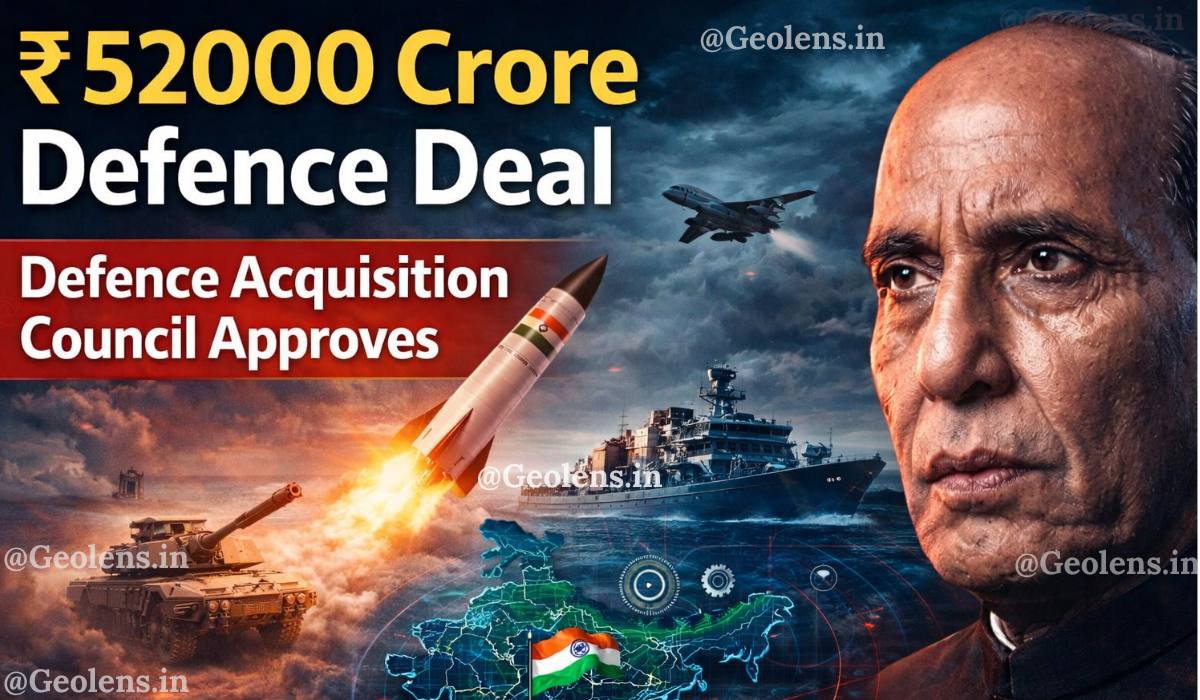
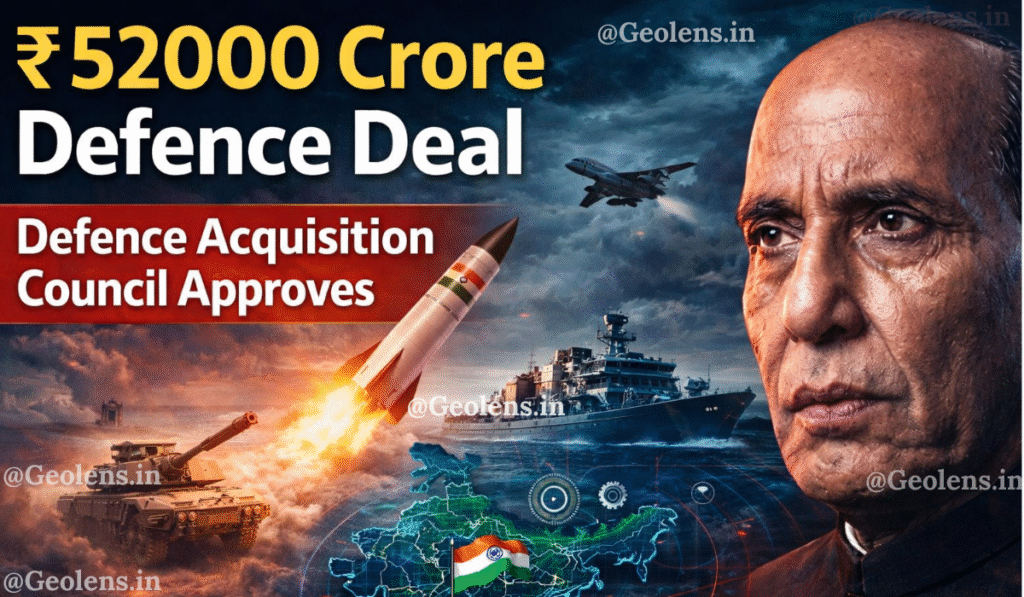
India has taken another major step towards strengthening its armed forces and accelerating defence modernization. The Defence Acquisition Council (DAC), chaired by Defence Minister Rajnath Singh, has approved a 52000 crore defence deal covering military procurement proposals for the Indian Army, Indian Navy, and Indian Air Force. The approval places a strong emphasis on indigenous manufacturing under the Aatmanirbhar Bharat initiative.
The 52000 crore defence deal reflects India’s long-term strategy of enhancing military readiness while reducing dependence on foreign defence imports. At a time when regional security challenges continue to evolve—from tensions along the Line of Actual Control (LAC) to increasing maritime competition in the Indian Ocean—these acquisitions are expected to significantly strengthen India’s operational capabilities.
For Indian Army- Anti-Unmanned Aerial Vehicle Electronic Warfare System Akash Tarang, Man Portable Anti-Tank Guided Missile (MPATGM) systems, Medium Range Surface-to-Air Missile (MRSAM) weapon systems, Very Short Range Air Defence Systems (V-SHORADS), Active Protection Systems for tanks and jet-based Kamikaze drone systems.
For the Indian Navy– Acquisition of Multi Influence Ground Mines (MIGM), Naval Shipborne Unmanned Aerial Systems (NSUAS) and the establishment of a Land Based Testing Facility (LBTF) for Electric Propulsion Systems.
For the Indian Air Force– Procurement of Fixed-Wing High Altitude Pseudo Satellites (FW-HAPS) FW-HAPS platform will provide persistent intelligence, surveillance and reconnaissance (ISR), telecommunications and remote sensing capabilities, enhancing the Air Force’s long-endurance operational reach.
What is the Defence Acquisition Council (DAC)?
The Defence Acquisition Council is India’s highest decision-making body responsible for approving capital acquisitions for the armed forces. It is chaired by the Defence Minister and includes senior military leadership and top officials from the Ministry of Defence.
Its responsibilities include:
- Approving major defence procurements
- Promoting indigenous defence production
- Ensuring timely modernization of the armed forces
- Improving operational preparedness
DAC approval is the first major step before procurement contracts are finalized.
Key Highlights of the 52000 Crore Defence Deal
The latest 52000 crore defence deal focuses on several critical areas:
- Modern weapon systems
- Air defence capabilities
- Naval equipment
- Advanced surveillance systems
- Military mobility
- Electronic warfare technologies
- Indigenous defence manufacturing
A significant portion of these procurements is expected to be sourced from Indian defence companies under the Buy (Indian-IDDM) and Buy (Indian) procurement categories.
Major Procurement Categories
| Category | Focus Areas | Details & Strategic Importance |
|---|---|---|
| 1. Air Defence Systems | – Fighter aircraft – Cruise missiles – Drones – Loitering munitions – Precision‑guided weapons | Strengthening India’s air defence network is one of the biggest priorities under the 52000 crore defence deal. The acquisitions aim to build a layered air defence system capable of countering diverse aerial threats. Recent global conflicts have underscored the need for multi‑tier protection against modern warfare tools such as drones and precision weapons. |
| 2. Enhanced Firepower for the Indian Army | – Long‑range precision strikes – Mobility – Battlefield awareness – Firepower – Rapid deployment capabilities | The Indian Army will receive modern weapon systems that enhance both offensive and defensive capabilities. These upgrades are crucial for mountainous and northern border operations, improving mobility, situational awareness, and rapid deployment. The modernization ensures the Army can deliver precision strikes and maintain dominance in high‑altitude combat zones. |
| 3. Strengthening the Indian Navy | – Maritime surveillance – Anti‑submarine warfare – Shipborne equipment – Naval communications – Mission readiness | The Navy’s modernization drive focuses on countering strategic competition in the Indian Ocean Region (IOR). The procurement package includes advanced systems for surveillance, underwater threat detection, and communication. As India’s maritime interests expand, bolstering naval readiness ensures protection of sea lanes and deterrence against regional challenges. |
| 4. Advanced Surveillance & Electronic Warfare | – Battlefield intelligence – Electronic surveillance – Communication security – Signal interception – Network‑centric warfare capabilities | Modern warfare depends on information superiority. The approved purchases enhance India’s ability to gather intelligence, secure communications, and intercept enemy signals. These technologies strengthen network‑centric operations, enabling commanders to make faster, data‑driven decisions and maintain an edge in electronic and cyber warfare. |
Also read about- India’s Project 18 Destroyer: Armed with 144 Missiles including BrahMos with Surveillance Power up to 500 km
Focus on Indigenous Manufacturing
Perhaps the most significant aspect of the 52000 crore defence deal is its continued support for India’s defence manufacturing ecosystem.
Under the Aatmanirbhar Bharat initiative, the government aims to:
- .Reduce defence imports
- Develop indigenous technologies
- Support private defence companies
- Strengthen Defence Public Sector Undertakings (DPSUs)
- Increase defence exports
Indian companies are expected to benefit from these procurement programs, creating employment opportunities while strengthening domestic industrial capabilities.
Why This 52000 Crore Defence Deal Matters
| Category | Focus Areas | Detailed Explanation & Strategic Importance |
|---|---|---|
| 1. Faster Military Modernization | – Replacement of ageing equipment – Induction of modern systems – Bridging capability gaps across Army, Navy, and Air Force | India’s armed forces are undergoing rapid modernization, replacing outdated platforms with advanced systems. These procurements close long‑standing capability gaps across all three services, ensuring balanced growth and improved combat efficiency. |
| 2. Better Preparedness Against Emerging Threats | – Border tensions – Drone warfare – Cyber threats – Maritime security – Missile proliferation | The evolving security environment demands readiness against both conventional and unconventional threats. Modern equipment enhances India’s ability to respond swiftly and effectively to border challenges, drone incursions, cyber attacks, and maritime or missile‑based threats. |
| 3. Economic Benefits | – Manufacturing – Research & Development – MSMEs – High‑skilled employment – Technology transfer | Large defence contracts stimulate India’s economy by boosting domestic manufacturing, encouraging innovation, and supporting MSMEs. They create high‑skilled jobs and enable technology transfer, strengthening India’s industrial base and self‑reliance. |
| 4. Boost to Defence Exports | – Expansion of domestic production – Global competitiveness – Supply to friendly nations | India’s record defence exports reflect growing global confidence in its technology. Strengthening domestic production allows Indian companies to compete internationally and supply equipment to partner nations, reinforcing diplomatic and strategic ties. |
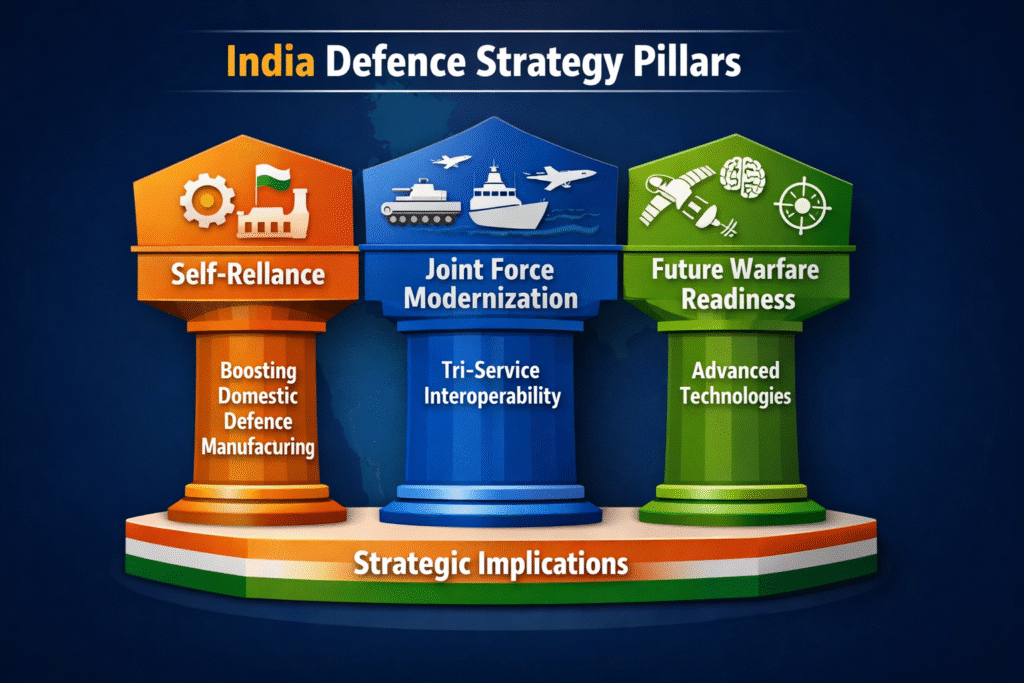
| 5. Strategic Implications | – Long‑term defence vision – Integration of modernization and self‑reliance | The 52000 crore deal aligns with India’s long‑term defence strategy, emphasizing sustainability, technological advancement, and strategic autonomy. It represents a holistic approach to national security and industrial growth. |
| 6. Self‑Reliance | – Domestic defence manufacturing – Reduced foreign dependence | Developing indigenous defence capabilities ensures India can sustain operations during crises without relying on external suppliers. This pillar strengthens resilience and supports the “Make in India” initiative. |
| 7. Joint Force Modernization | – Tri‑service interoperability – Shared technological upgrades | The acquisitions benefit the Army, Navy, and Air Force simultaneously, improving coordination and interoperability. Unified modernization enhances joint operations and strengthens India’s integrated defence posture. |
| 8. Future Warfare Readiness | – Artificial Intelligence – Drones – Electronic warfare – Precision‑guided weapons – Network‑centric operations | Modern conflicts are increasingly technology‑driven. These procurements prepare India for next‑generation warfare by integrating AI, autonomous systems, and digital networks. The upgrades ensure faster decision‑making, precision targeting, and dominance in electronic and cyber domains. |
Challenges Ahead
While DAC approval is an important milestone, successful implementation depends on:
- Timely contract negotiations
- Efficient manufacturing
- Meeting delivery schedules
- Quality assurance
- Budget management
Historically, procurement delays have slowed modernization. Efficient execution will be critical to realizing the full benefits of the 52000 crore defence deal.
Author’s Viewpoint
India’s 52 000 crore defence deal is more than just a procurement milestone—it is a strategic statement of intent. By prioritizing indigenous manufacturing, the government is not only modernizing the armed forces but also laying the foundation for a robust defence industrial base. The emphasis on air defence, naval readiness, and electronic warfare reflects a clear understanding of future battlefield requirements where information superiority and technological edge will define victory.
However, the true test lies in execution. Procurement delays and manufacturing bottlenecks have historically slowed modernization. If India can overcome these hurdles, this deal will mark a turning point—transforming the armed forces into a modern, self‑reliant, and globally competitive force. In essence, the deal embodies India’s resolve to secure its borders, protect its maritime interests, and emerge as a credible defence exporter in the years ahead.
Conclusion
The 52000 crore defence deal approved by the Defence Acquisition Council marks another significant milestone in India’s defence modernization journey. By focusing on advanced weapon systems, air defence, naval capabilities, surveillance technologies, and indigenous manufacturing, the government aims to strengthen national security while supporting the growth of India’s domestic defence industry.
As regional and global security dynamics continue to evolve, sustained investment in modern military capabilities will remain essential. If implemented efficiently, the 52000 crore defence deal will enhance the operational readiness of the Indian Armed Forces and reinforce India’s position as an increasingly self-reliant defence power.
Frequently Asked Questions (FAQ)
1. What is the Defence Acquisition Council (DAC)? The DAC is India’s highest decision‑making body for defence procurements. Chaired by the Defence Minister, it approves capital acquisitions, promotes indigenous production, and ensures timely modernization of the armed forces.
2. Why is the 52000 crore defence deal significant? It represents one of the largest procurement packages in recent years, covering the Army, Navy, and Air Force simultaneously. It emphasizes self‑reliance under Aatmanirbhar Bharat and addresses critical capability gaps.
3. How will this deal strengthen India’s air defence? The acquisitions include layered systems to counter fighter aircraft, drones, cruise missiles, loitering munitions, and precision‑guided weapons, ensuring protection against modern aerial threats.
4. What role does indigenous manufacturing play in this deal? A major portion of the procurements will be sourced from Indian companies under Buy (Indian‑IDDM) and Buy (Indian) categories, boosting domestic industry, employment, and technology transfer.
5. What challenges could affect implementation? Timely contract negotiations, efficient manufacturing, delivery schedules, and budget management remain critical. Past delays in procurement highlight the importance of execution discipline.
People Also Ask (PAA)
1. What is the significance of India’s 52000 crore defence deal? The deal marks a major step in accelerating military modernization, strengthening air defence, naval capabilities, and electronic warfare systems. It also emphasizes indigenous manufacturing under Aatmanirbhar Bharat, reducing reliance on foreign imports.
2. How will the defence deal improve India’s air defence systems? The acquisitions include layered defence technologies to counter fighter aircraft, drones, cruise missiles, loitering munitions, and precision‑guided weapons. This ensures India can respond effectively to modern aerial threats.
3. What role does indigenous manufacturing play in the defence deal? A significant portion of the procurements will be sourced from Indian defence companies under Buy (Indian‑IDDM) and Buy (Indian) categories. This boosts domestic industry, creates jobs, and strengthens India’s self‑reliance in defence production.
4. How does the deal benefit the Indian Navy? The Navy will receive advanced systems for maritime surveillance, anti‑submarine warfare, shipborne equipment, and communications. These upgrades are crucial for safeguarding India’s expanding maritime interests in the Indian Ocean Region.
5. What challenges could affect the implementation of the defence deal? Timely contract negotiations, efficient manufacturing, delivery schedules, and budget management are critical. Historically, procurement delays have slowed modernization, making execution discipline essential for success.


US House Passes Massive $1.15 Trillion Defense Bill: What It Means for America, China, India, and the World
The United States House of Representatives has approved a historic $1.15 trillion Defense Bill ,…
China’s Warning and Nuclear Tensions in the Russia Ukraine War

What`s Happening in POK, Why POK protestors ask India for help in 2026
In a striking turn of events, Their plea—POK protestors ask India for help—is more than…

India Declares 23 Individuals as Terrorists: A New Chapter in Counterterrorism
Introduction India Declares 23 Individuals as Terrorists under the Unlawful Activities (Prevention) Act (UAPA),…
52000 Crore Defence Deal: Defence Acquisition Council Approves
India has taken another major step towards strengthening its armed forces and accelerating defence…

US Dollar Bypassing? India Japan Local Currency Trade: How Yen-Rupee Settlement Can Reduce Costs and Transform Bilateral Commerce
India and Japan are exploring a groundbreaking: India Japan Local Currency Trade framework that…

SECOND NATURAL GAS DISCOVERY IN ANDAMAN: India’s Energy Future Takes a New Turn
The second natural gas discovery in Andaman by Oil India Limited (OIL) has created…
General NS Raja Subramani as New CDS and Admiral Krishna Swaminathan as New Navy Chief 2026
New CDS & New Navy Chief : On Sunday, India experienced a major shift…
1 thought on “52000 Crore Defence Deal: Defence Acquisition Council Approves”