
Introduction
India Declares 23 Individuals as Terrorists under the Unlawful Activities (Prevention) Act (UAPA), marking a significant escalation in its fight against cross‑border militancy. This move not only exposes the networks operating from Pakistan and Afghanistan but also strengthens India’s narrative on global platforms that terrorism cannot be justified under any pretext.
By expanding its list of designated terrorists to 80 individuals, India is sending a strong message: those who recruit, train, fund, or arm militants will face legal and diplomatic consequences.
What is UAPA
The Unlawful Activities (Prevention) Act (UAPA) is India’s primary anti‑terror law, enacted in 1967 to safeguard national sovereignty and integrity. It empowers the government to ban organizations or individuals involved in unlawful or terrorist activities, seize their assets, and prosecute them under strict provisions.
Key Points About UAPA
Purpose
- Protect sovereignty and unity of India.
- Prevent secessionist or terrorist activities that threaten national security.
- Provide a legal framework to ban organizations and individuals engaged in unlawful acts.
Background of the Declaration
The announcement that India Declares 23 Individuals as Terrorists comes at a time of heightened regional tensions.
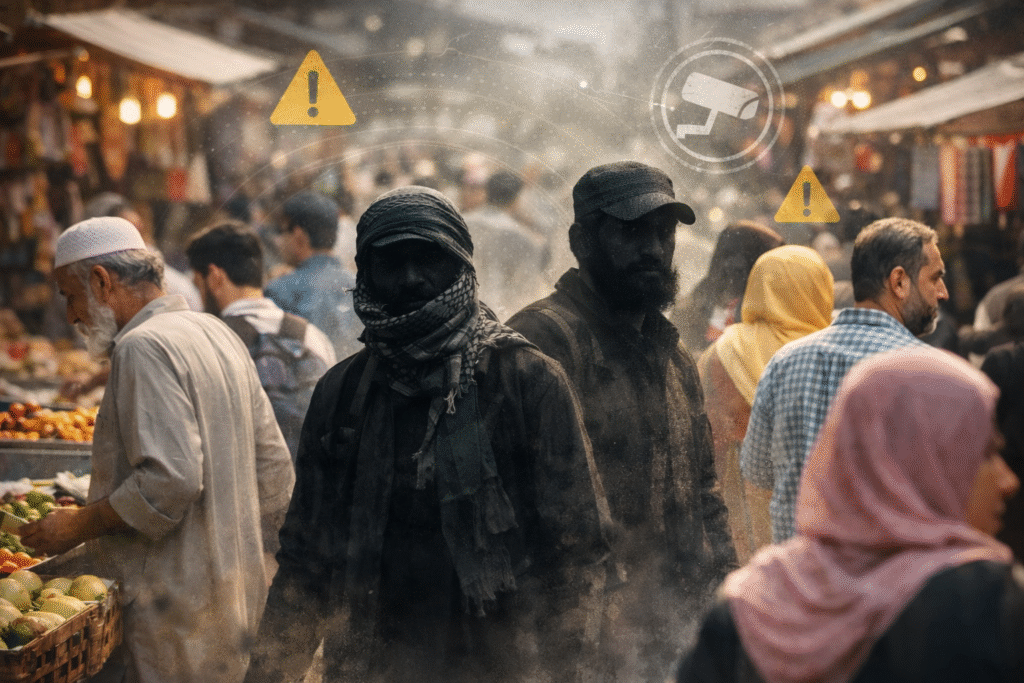
- 17 Pakistanis: Directly linked to groups like Lashkar‑e‑Taiba (LeT) and Jaish‑e‑Mohammed (JeM).
- 6 Indians: Radicalized and now operating from Pakistan or Afghanistan.
- Activities: Recruitment of youth, training in camps, supply of drones and weapons, financing terror networks, and planning infiltration into Indian territory.
This designation reflects India’s determination to expose the cross‑border ecosystem that fuels militancy.
Strategic Implications for India–Pakistan Relations
India Declares 23 Individuals as Terrorists at a time when backchannel talks with Pakistan have collapsed.
- Diplomatic Freeze: New Delhi has rejected normalization efforts, citing Pakistan’s continued support for terror groups.
- Indus Water Treaty Disputes: Long‑standing water sharing disagreements remain unresolved.
- Regional Partnerships: India and Japan have jointly called for stronger global action against terror organizations, highlighting the international dimension of the issue.
This declaration further isolates Pakistan diplomatically, making it harder for Islamabad to project itself as a victim of terrorism.
Global Terror Networks and UN Listings
Declares 23 Individuals as Terrorists : Many of the individuals India Declares as Terrorists are linked to groups already recognized by the United Nations:
- Al‑Qaeda
- ISIS
- Jaish‑e‑Mohammed (JeM)
- Lashkar‑e‑Taiba (LeT)
- Abu Sayyaf and Abdullah Brigade
These organizations have expanded their reach beyond South Asia, making India’s move relevant to global security.
Also Ready about- 52000 Crore Defence Deal: Defence Acquisition Council Approves

India’s Push for CCIT (Comprehensive Convention on International Terrorism)
India Declares 23 Individuals as Terrorists while simultaneously renewing its call for a global treaty against terrorism. Proposed in 1996, the CCIT seeks to establish a universal definition of terrorism and obligate nations to prosecute or extradite offenders.
- India’s Position: Terrorism cannot be justified under any pretext, including political or religious causes.
- Global Resistance:
- The United States hesitates due to concerns over “self‑determination” movements.
- The European Union cites humanitarian law complexities.
- Pakistan opposes CCIT, arguing that it undermines its narrative on Kashmir.
Scenario Analysis
- If India’s move gains global traction: More countries may adopt similar domestic laws, isolating Pakistan diplomatically.
- If resistance continues: Terror groups may exploit loopholes in international law, prolonging instability.
- Regional Security Outlook: India’s proactive stance could encourage South Asian nations to cooperate more closely on counterterrorism.
Also Read about- US Dollar Bypassing? India Japan Local Currency Trade: How Yen-Rupee Settlement Can Reduce Costs and Transform Bilateral Commerce

Counterarguments
- Pakistan’s Narrative: Islamabad often frames such actions as politically motivated, claiming they target “freedom fighters” in Kashmir.
- Human Rights Concerns: Critics argue that broad terror designations risk misuse against dissenting voices.
- Global Divide: Without consensus, CCIT may remain stalled, limiting the effectiveness of India’s push.
Author’s Viewpoint
India Declares 23 Individuals as Terrorists not just as a legal step but as a strategic signal. By naming individuals across borders, New Delhi asserts its right to defend sovereignty and demands accountability from Pakistan. While challenges remain in achieving global consensus, India’s persistence highlights its role as a key voice in shaping international counterterrorism norms.
Conclusion
The declaration that India Declares 23 Individuals as Terrorists under UAPA marks a turning point in India’s counterterrorism strategy. It reinforces the message that terrorism, regardless of justification, will be confronted with legal, diplomatic, and strategic measures. The move also reopens the debate on the need for a global treaty like CCIT, which could finally provide a unified framework against terrorism worldwide.
Frequently Asked Questions (FAQ)
Q1. What does it mean when India declares someone a terrorist under UAPA? A1. When India declares an individual a terrorist under the Unlawful Activities (Prevention) Act (UAPA), it legally designates them as a threat to national security. Their assets can be frozen, organizations banned, and they can be prosecuted under strict anti‑terror laws.
Q2. How many individuals has India declared terrorists so far? A2. With the latest addition of 23 names, India’s total list of designated terrorists under UAPA has reached 80 individuals.
Q3. Why did India declare 23 individuals as terrorists in 2026? A3. These individuals were accused of recruiting militants, running training camps, supplying weapons and drones, financing terror networks, and planning infiltration into Indian territory.
Q4. Are these declared terrorists only from Pakistan? A4. Out of the 23 individuals, 17 are Pakistanis, while 6 are Indians who were radicalized and now operate from Pakistan or Afghanistan.
Q5. What is the impact of this declaration on India–Pakistan relations? A5. The move has further strained ties between India and Pakistan, as New Delhi accuses Islamabad of supporting terror groups. It also strengthens India’s diplomatic push for global action against terrorism.
People Also Ask (PAA)
Q1. What is UAPA and why is it important? A1. The Unlawful Activities (Prevention) Act (UAPA) is India’s primary anti‑terror law, enacted in 1967. It empowers the government to ban organizations and individuals involved in terrorism, seize their assets, and prosecute them.
Q2. Can India declare individuals as terrorists without trial? A2. Yes. After the 2019 amendment to UAPA, the government can designate individuals as terrorists based on evidence of involvement in unlawful or terror activities, even before trial.
Q3. How does India’s declaration align with global anti‑terror efforts? A3. India’s move aligns with UN‑listed terror groups and strengthens its call for a global treaty (CCIT) to criminalize terrorism universally.
Q4. What are the criticisms of UAPA? A4. Critics argue that UAPA’s broad definitions can be misused against activists or dissenters, and point to low conviction rates despite thousands of arrests.
Q5. How does this declaration affect India’s global image? A5. By declaring 23 individuals as terrorists, India positions itself as a proactive nation in counterterrorism, reinforcing its credibility in international forums while pressing for collective global action.


US House Passes Massive $1.15 Trillion Defense Bill: What It Means for America, China, India, and the World
The United States House of Representatives has approved a historic $1.15 trillion Defense Bill ,…

China’s Warning and Nuclear Tensions in the Russia Ukraine War

What`s Happening in POK, Why POK protestors ask India for help in 2026
In a striking turn of events, Their plea—POK protestors ask India for help—is more than…

India Declares 23 Individuals as Terrorists: A New Chapter in Counterterrorism
Introduction India Declares 23 Individuals as Terrorists under the Unlawful Activities (Prevention) Act (UAPA),…

52000 Crore Defence Deal: Defence Acquisition Council Approves
India has taken another major step towards strengthening its armed forces and accelerating defence…

US Dollar Bypassing? India Japan Local Currency Trade: How Yen-Rupee Settlement Can Reduce Costs and Transform Bilateral Commerce
India and Japan are exploring a groundbreaking: India Japan Local Currency Trade framework that…