The United States House of Representatives has approved a historic $1.15 trillion Defense Bill , for Fiscal Year 2027, marking one of the largest military spending packages ever passed by Congress. The bill reflects Washington’s growing focus on strengthening military capabilities in response to evolving security challenges around the world.
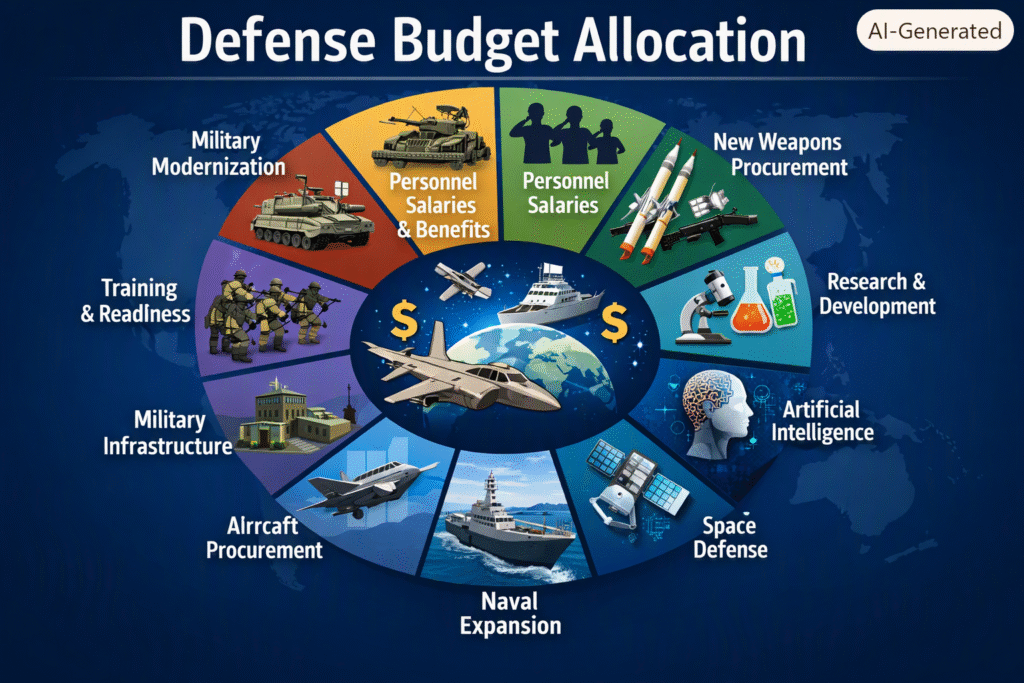
From competition with China in the Indo-Pacific to cyber warfare, artificial intelligence, space security, and next-generation weapons, the legislation aims to prepare the U.S. military for future conflicts rather than the wars of the past.
But why is the United States spending such a massive amount on defense? Where will the money go? How does it affect countries like China, Russia, and India? And what happens next before the bill becomes law?
Let’s break it down.
What Is the $1.15 trillion Defense Bill FY2027 ?
Every year, the U.S. Congress debates and approves legislation that authorizes military spending for the Department of Defense.
The Fiscal Year 2027 defense bill authorizes approximately $1.15 trillion Defense Bill in military funding. It covers:
It is important to understand that this legislation authorizes defense programs and funding priorities. Separate appropriations legislation is generally required before funds can actually be spent.
Why Is the Budget So Large?
The global security environment has changed dramatically over the last decade.
Several developments have influenced U.S. defense planning:
Strategic Competition with China
China has rapidly expanded:
- Its navy
- Hypersonic missile capabilities
- Space technology
- Artificial intelligence
- Cyber warfare units
- Military presence in the South China Sea
As a result, the United States is investing heavily to maintain technological and military superiority.
| Country | 2026 Defense Budget (USD Billions) (approx.) | Global Rank | Key Notes (approx.) |
|---|---|---|---|
| 🇺🇸 United States | 1.15 T | 1 | Largest worldwide; accounts for ~40% of global military spending |
| 🇨🇳 China | 277-276 B | 2 | Steady growth; focus on modernization and space capabilities |
| 🇷🇺 Russia | 166-167 B | 3 | High GDP share (~5%); emphasis on missile and cyber programs |
| 🇩🇪 Germany | 114-127 B | 4 | Increased post‑Ukraine war; NATO commitments driving expansion |
| 🇮🇳 India | 92.1 B | 5 | ₹7.85 lakh crore allocation; 15% rise year‑on‑year |
| 🇬🇧 United Kingdom | 88-90 B | 6 | Focus on naval and AI‑driven defense systems |
| 🇫🇷 France | 67-68 B | 8 | Modernization of nuclear deterrent and overseas operations |
| 🇵🇱 Poland | ~55 B | 12 – 15 | Rapid increase; major procurement of tanks and aircraft |
Kindly note- United Kingdom’s Defense Budget Ranking
The United Kingdom consistently ranks among the world’s top military spenders, holding either the 5th or 6th position globally, depending on the source. According to the International Institute for Strategic Studies (IISS) and other global expenditure trackers, the UK’s defense budget is estimated at around $94 billion, placing it 5th worldwide. Meanwhile, data from the Stockholm International Peace Research Institute (SIPRI) — which includes paramilitary and auxiliary forces — estimates the figure at approximately $89 billion, positioning the UK 6th globally.
$1.15 Trillion Defense Bill: Continued Tensions with Russia
Although much attention focuses on the Indo-Pacific, Russia remains a major military concern.
The ongoing conflict in Ukraine has demonstrated that modern warfare requires:
- Large stockpiles of precision weapons
- Air defense systems
- Electronic warfare
- Intelligence and surveillance
- Drone technology
These lessons are shaping future U.S. military investments.
Growing Importance of Technology
Today’s military competition extends far beyond traditional tanks and fighter aircraft.
Modern defense now includes:
- Artificial Intelligence
- Quantum computing
- Autonomous drones
- Space surveillance
- Cybersecurity
- Electronic warfare
The FY2027 defense bill allocates significant resources toward these emerging technologies.
$1.15 trillion Defense Bill: Where Will the Money Be Spent?
The defense budget supports nearly every branch of the U.S. military.
U.S. Air Force
Funding includes investments in:
- Next-generation fighter aircraft
- Long-range bombers
- Aerial refueling capabilities
- Intelligence, surveillance, and reconnaissance systems
The objective is to maintain air superiority in future conflicts.
U.S. Navy
The Navy continues expanding its capabilities because maritime competition is becoming increasingly important.
Funding supports:
- Aircraft carriers
- Destroyers
- Submarines
- Amphibious ships
- Naval aviation
- Undersea warfare
The Indo-Pacific remains one of the Navy’s highest priorities.
U.S. Army
The Army will continue modernization efforts involving:
- Long-range precision fires
- Missile defense
- Armored vehicles
- Battlefield communications
- Soldier modernization
Space Force
Space has become a critical military domain.
Funding supports:
- Military satellites
- Missile warning systems
- Space surveillance
- Satellite communications
- Protection of space assets
Artificial Intelligence Becomes a Major Priority
One of the biggest themes of the FY2027: $1.15 trillion Defense Bill is artificial intelligence.
Modern militaries increasingly rely on AI for:
- Intelligence analysis
- Drone operations
- Logistics
- Battlefield decision support
- Predictive maintenance
- Cyber defense
Rather than replacing soldiers, AI is expected to improve the speed and quality of military decision-making.
Cyber Warfare Is No Longer Optional
Cyber attacks can disrupt:
- Military networks
- Banking systems
- Power grids
- Communications
- Transportation
Governments worldwide now consider cybersecurity an essential component of national defense.
The defense bill includes investments to strengthen cyber capabilities and improve resilience against digital threats.
$1.15 trillion Defense Bill :The Indo-Pacific Takes Center Stage
The Indo-Pacific has become one of the world’s most strategically important regions.
It includes:
- Taiwan Strait
- South China Sea
- East China Sea
- Indian Ocean
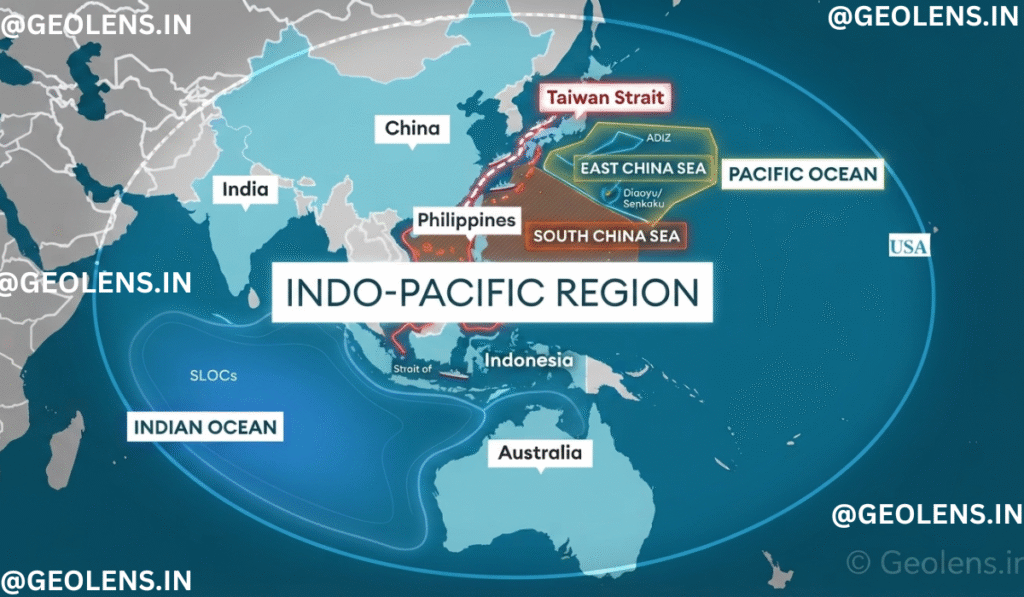
These waterways carry a significant share of global trade.
The United States continues working with regional partners such as:
- Japan
- Australia
- South Korea
- The Philippines
- India
The objective is to maintain regional stability and ensure freedom of navigation.
$1.15 trillion Defense Bill : What Does This Mean for China?
Although the legislation addresses a broad range of security priorities, many analysts believe competition with China is one of its central drivers.
China has significantly expanded:
- Naval shipbuilding
- Missile forces
- Air capabilities
- Space assets
- Artificial intelligence
The United States is responding by investing in modernization and advanced technologies to preserve its strategic advantages.
$1.15 trillion Defense Bill : What Does This Mean for India?
India closely follows developments in U.S. defense policy because both countries share interests in maintaining stability across the Indo-Pacific.
Potential implications include:
Stronger Strategic Cooperation
Defense cooperation between India and the United States has expanded through:
- Joint military exercises
- Technology partnerships
- Maritime cooperation
- Intelligence sharing
Regional Balance
A stronger U.S. military presence could contribute to maintaining a strategic balance in the Indo-Pacific.
Defense Technology Opportunities
Growing collaboration may create additional opportunities for technology transfer, co-development, and industrial partnerships under future agreements.
Economic Impact
Defense spending also affects the economy.
Large defense budgets support:
- Aerospace manufacturing
- Shipbuilding
- Electronics
- Artificial intelligence companies
- Research institutions
- Skilled employment
Supporters argue that defense investments strengthen innovation and national security.
Critics, however, question whether portions of the budget could instead be directed toward domestic priorities such as healthcare, education, or infrastructure.
Political Debate
Although the House approved the legislation, lawmakers expressed differing views.
Supporters argue:
- The world is becoming more dangerous.
- Military modernization cannot be delayed.
- Technological superiority is essential.
Critics argue:
- Defense spending continues to rise.
- Fiscal pressures are increasing.
- More funding should be directed toward domestic programs.
Such debates are common during the annual defense authorization process.
Also Read about- 52000 Crore Defence Deal: Defence Acquisition Council Approves

What Happens Next?
Approval by the House does not immediately make the bill law.
The remaining process generally includes:
- Senate consideration and approval.
- Resolution of differences between House and Senate versions, if necessary.
- Final approval by both chambers.
- Presidential signature.
Only after completing these steps does the authorization process conclude, with appropriations legislation then providing funding for authorized programs.
$1.15 trillion Defense Bill : Why the World Is Watching
The United States maintains one of the world’s largest and most technologically advanced militaries.
Changes in American defense policy often influence:
- NATO allies
- Indo-Pacific partners
- Defense industries
- Global arms markets
- Strategic planning in other countries

As a result, decisions made in Washington are closely monitored around the world.
Final Thoughts
The House’s approval of the $1.15 trillion Defense Bill reflects how rapidly the global security environment is evolving. Rather than focusing solely on traditional military power, the legislation emphasizes advanced technologies, cyber capabilities, artificial intelligence, and space security.
For allies such as India, the bill may strengthen strategic cooperation in the Indo-Pacific. For competitors like China and Russia, it signals continued U.S. investment in maintaining military readiness and technological leadership.
However, the legislative process is not yet complete. The Senate must consider the bill, and any differences between the two chambers will need to be resolved before it can become law. Even after authorization, Congress must still approve appropriations that provide the actual funding.
Regardless of the final outcome, the debate surrounding this record defense bill highlights a broader reality: military competition in the 21st century is increasingly defined by technology, resilience, and strategic partnerships as much as by traditional armed forces.
Also read about- India’s Project 18 Destroyer: Armed with 144 Missiles including BrahMos with Surveillance Power up to 500 km



US House Passes Massive $1.15 Trillion Defense Bill: What It Means for America, China, India, and the World
The United States House of Representatives has approved a historic $1.15 trillion Defense Bill ,…

China’s Warning and Nuclear Tensions in the Russia Ukraine War

What`s Happening in POK, Why POK protestors ask India for help in 2026
In a striking turn of events, Their plea—POK protestors ask India for help—is more than…

India Declares 23 Individuals as Terrorists: A New Chapter in Counterterrorism
Introduction India Declares 23 Individuals as Terrorists under the Unlawful Activities (Prevention) Act (UAPA),…

52000 Crore Defence Deal: Defence Acquisition Council Approves
India has taken another major step towards strengthening its armed forces and accelerating defence…

US Dollar Bypassing? India Japan Local Currency Trade: How Yen-Rupee Settlement Can Reduce Costs and Transform Bilateral Commerce
India and Japan are exploring a groundbreaking: India Japan Local Currency Trade framework that…