Table of Contents
The ocean is controlled by those who possess modernized weapons, maneuverability, stealth, and speed.
Pratik Kondawale Tweet
Introduction – Official Government Statement
In early 2025, the Government of India made it official: India will not pursue the operation of three aircraft carriers simultaneously. Instead, the focus will shift toward strengthening undersea capabilities and other modern naval assets. This decision came after months of strategic evaluation, budgeting reviews, and technological feasibility assessments.
Sources within the Ministry of Defence confirmed that while India will maintain a two-carrier force, the long-anticipated third aircraft carrier—once envisioned as a nuclear-powered supercarrier—has been effectively shelved. This change marks a significant shift in India’s naval doctrine and strategic priorities.
The Original Plan: Third Aircraft Carrier
For over a decade, Indian naval planners advocated a Third Aircraft Carrier model:
INS Vikramaditya to operate on the western front (Arabian Sea)
INS Vikrant to cover the eastern seaboard (Bay of Bengal)
INS Vishal as a strategic reserve or global deployment carrier
The third aircraft carrier, INS Vishal, was to be a next-generation vessel featuring advanced systems like CATOBAR (Catapult Assisted Take-Off but Arrested Recovery), possibly nuclear propulsion, and an expanded air wing including drones and early warning aircraft.
This model was meant to ensure that two aircraft carriers would always be available for deployment while one underwent maintenance, thereby providing continuous naval dominance across the Indian Ocean Region (IOR).
Why India Changed the Course for Third Aircraft Carrier
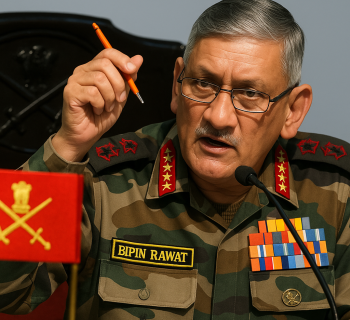
Statement by Late CDS Gen. Bipin Rawat
Former Chief of Defence Staff, Gen. Sir Bipin Rawat, had voiced skepticism about the need for three carriers. He famously described them as “sitting ducks“, vulnerable to modern anti-ship missiles and satellite tracking systems. He stressed that the Navy’s demand for a third carrier should only be considered after evaluating the operational performance of the first indigenous carrier, INS Vikrant.
Rising Costs & Budgetary Realities
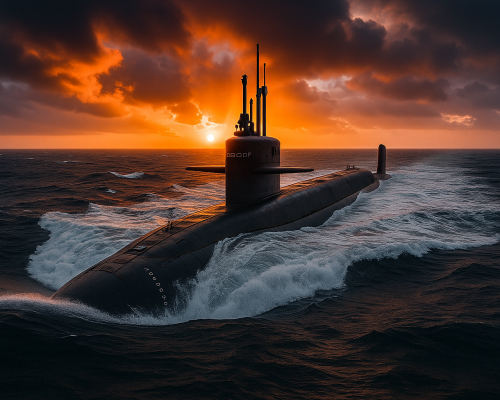
Strategic Shift to Submarines
India is now prioritizing undersea warfare capabilities, including:
- Project 75 Alpha – Indigenous nuclear-powered attack submarines (SSNs)
- Expansion of Kalvari-class diesel-electric submarines
- Improving anti-submarine warfare (ASW) assets and technology
Submarines offer stealth, survivability, and strategic deterrence—qualities more relevant in today’s high-tech, contested maritime zones.
Technology & Infrastructure Limitations
Building a nuclear-powered, CATOBAR carrier like INS Vishal would require massive technological advancements, EMALS systems, and upgrades to shipbuilding facilities. India currently lacks this infrastructure.
What's the Plan Now | Way Forward
India’s current plan focuses on maintaining a two-carrier fleet:
INS Vikramaditya (Russian origin, operational since 2013)
INS Vikrant (first indigenous carrier, under operationalization)
However, sources in the Defence establishment have confirmed that INS Vikramaditya will be phased out in the next 10–12 years. Plans are underway to construct a second indigenous carrier that will replace Vikramaditya—not add to the fleet.
In simpler words: The Navy will still build a new carrier, but only to replace the aging Vikramaditya. So, India will continue to operate just two carriers at any time, not three.
The upcoming carrier (IAC-2) may be a repeat of the Vikrant-class to avoid technological delays and cost escalation.
Aircraft Carrier vs Submarine: A New Doctrine
India is now leaning toward a doctrine of sea denial and stealth power, rather than power projection via large surface assets.
| Feature / Capability | Aircraft Carriers | Submarines (SSKs/SSNs/SSBNs) |
|---|---|---|
| Primary Role | Power projection, air dominance at sea | Sea denial, stealth strike, deterrence |
| Visibility | High – large and easy to detect | Low – stealthy and difficult to detect |
| Vulnerability | Susceptible to long-range anti-ship missiles and surveillance | Hard to detect, can strike silently |
| Operational Range | Global (especially nuclear carriers), but depends on support fleet | Extremely long (esp. nuclear SSNs/SSBNs) |
| Construction Cost | ₹45,000–50,000 crore (~$6–8B) per carrier + support fleet | ₹6,000–15,000 crore (~$800M–$2B) per sub |
| Time to Build | 10–15 years | 5–8 years (nuclear takes longer) |
| Deterrence Factor | Visible deterrence – shows presence | Strategic deterrence – hidden & deadly |
| Flexibility in conflict | Ideal in high-intensity wars, needs airspace freedom | Useful in both peacetime surveillance and wartime offensive/defensive roles |
| Crew & Manpower | 1,500–2,000 per carrier group | 80–120 per submarine |
| Current Indian Assets | INS Vikramaditya, INS Vikrant | Kalvari-class (SSKs), Arihant-class (SSBNs), SSN project under development |
India’s shift reflects an understanding that future naval warfare may be less about visible dominance and more about invisible lethality.
Comparison Chart – Naval Power: India vs China vs USA vs Russia
| Country | Aircraft Carriers | Nuclear Subs | Conventional Subs | Naval Strategy |
| India | 2 (1 planned) | 1 SSBN (6 SSNs planned) | 14 SSKs | Regional dominance, stealth focus |
| China | 3 (3 more planned) | 12 SSNs, 6 SSBNs | 60+ SSKs | Blue-water expansion, carrier-centric |
| USA | 11 (nuclear) | 70+ SSNs, 14 SSBNs | None (all nuclear) | Global domination, full carrier strike groups |
| Russia | 1 (Admiral Kuznetsov) | 30+ nuclear subs | 20+ SSKs | Coastal defense & Arctic power |
Also read about – “We should have our own jet engines for Made in India fighter jets”: PM Modi in Independence Day 2025
Challenges for the Indian Navy
- Budget Allocation – Competing demands from Army and Air Force.
- Aging Fleet – Many warships and submarines need replacement.
- Infrastructure – Limited capacity to build large warships.
- Technology Gaps – EMALS, nuclear propulsion, advanced radar systems still underdeveloped.
- Logistics – Maintaining a fleet across two oceanic fronts with limited bases.
- China’s Maritime Rise – Rapid expansion of PLA Navy threatens India’s regional dominance.
Conclusion
India’s decision to drop the third aircraft carrier is a strategic recalibration, not a retreat. It reflects a pragmatic assessment of budget, technology, and evolving threats. Instead of investing in large, expensive surface platforms, India is betting on stealth, flexibility, and undersea strength.
The future Indian Navy will likely be a leaner, smarter force—backed by two carriers, a fleet of nuclear and conventional submarines, and advanced surveillance and strike capabilities. While the aircraft carrier remains a symbol of naval power, India is now defining power through stealth and strategic deterrence, not just visible might.
No Third Aircraft Carrier Frequently Asked Questions (FAQ)
Q1: Why did India decide not to pursue a third aircraft carrier?
India chose not to operate a third aircraft carrier due to a combination of strategic, technological, and budgetary factors. The government wants to focus more on stealth-based platforms like submarines, which offer greater survivability and deterrence in modern naval warfare. High costs, emerging missile threats, and infrastructure limitations also influenced the decision.
Q2: Is India completely canceling the third aircraft carrier (INS Vishal)?
Not entirely. India is not abandoning carrier operations, but reframing the third carrier as a replacement, not an addition. The upcoming Indigenous Aircraft Carrier-2 (IAC-2) will eventually replace INS Vikramaditya, which is expected to retire in the next 10–12 years.
Q3: What did General Bipin Rawat mean by calling aircraft carriers “sitting ducks”?
Former CDS Gen. Bipin Rawat warned that aircraft carriers are large and easily detectable, making them vulnerable to modern anti-ship missiles and space-based surveillance. He advocated for investing in undersea capabilities and prioritizing results from INS Vikrant before committing to another carrier.
Q4: What is India focusing on instead of a third carrier?
India is investing in:\n- Nuclear-powered attack submarines (SSNs) under Project 75 Alpha\n- Expansion of the Kalvari-class submarines\n- Improved anti-submarine warfare capabilities and drone surveillance\n- Modern destroyers, frigates, and maritime strike aircraft
Q5: Will India’s naval power weaken without a third carrier?
Not necessarily. While aircraft carriers are visible symbols of power, India’s new strategy prioritizes stealth, strategic deterrence, and underwater dominance, which are more effective in high-tech conflict scenarios. The two-carrier model is still considered sufficient for India’s dual-front maritime posture.
Q6: How does India compare with China and the US in naval strength?
India: 2 carriers (1 more planned), 14 conventional subs, 1 SSBN, 6 SSNs in development
China: 3 carriers (3 more coming), over 70 submarines
USA: 11 nuclear-powered carriers, unmatched global reach
While India lags in numbers, its focus is on quality regional deterrence, not global expeditionary power like the US or China.
Q7: What happens to INS Vikramaditya in the future?
According to defence sources, INS Vikramaditya will be phased out within the next 10–12 years due to age and maintenance costs. It will be replaced by a newer indigenous aircraft carrier (IAC-2), maintaining India’s two-carrier operational capability.
Q8: Is India moving away from carrier-based naval strategy altogether?
No, India still values carriers but is no longer following a carrier-heavy doctrine. The strategy is evolving to balance surface power with undersea lethality, particularly in response to China’s aggressive expansion and modern warfare trends.
No Third Aircraft Carrier People Also Ask (PPA)
- Why did India drop the plan for a third aircraft carrier?
Because of extremely high costs, technological limitations, and the growing vulnerability of large carriers to long-range precision missiles and satellite tracking. India now prefers more survivable, stealth-driven platforms. - What is India focusing on instead of a third aircraft carrier?
India is prioritizing nuclear-powered attack submarines, expansion of diesel-electric submarines, stronger anti-submarine warfare, and advanced maritime surveillance to counter modern threats more effectively. - Is the INS Vishal project cancelled?
Not completely. The option of building a new carrier remains, but only as a replacement for INS Vikramaditya — not as a third addition. India will stick to a two-carrier strategy for operational practicality. - Why did Gen. Bipin Rawat call aircraft carriers “sitting ducks”?
He warned that carriers are large, easy-to-spot targets for hypersonic missiles and space-based tracking systems — making them highly vulnerable in modern combat environments. - Will India’s naval strength reduce without a third aircraft carrier?
No. India is shifting to a smarter doctrine of stealth and sea denial, where submarines provide more realistic deterrence and survivability than massive surface strike groups. - What are the biggest challenges India faces in operating multiple carriers?
Aging fleet, limited budget, lack of advanced shipyard infrastructure, costly technology like EMALS and nuclear propulsion, and manpower demands of carrier battle groups. - What is India’s future aircraft carrier plan?
A new Indigenous Aircraft Carrier-2 (IAC-2) is planned to replace INS Vikramaditya within 10–12 years. This keeps India operating two active carriers for both seaboards without financial overstretch. - Why are submarines considered a better option for India’s naval strategy?
Submarines offer stealth, strike capability, and strategic deterrence — making them harder to detect and ideal for contested zones in the Indian Ocean against rivals like China.
|The GeoLens – Indian Defense & Global Affairs
India’s 5th Generation Fighter Jet AMCA: Where We Stand, Challanges, & Way Ahead
Pratik Kondawale
Strategist | Indian Defence & Global Affairs
Founder of GeoLens.in, Pratik writes in-depth analysis on India’s defence strategy, military tech, and global power shifts delivering sharp insights through an Indian lens.

China’s Warning and Nuclear Tensions in the Russia Ukraine War
The Russia Ukraine War has become one of the most defining conflicts of the 21st century, reshaping global geopolitics, economics, and security. What began as a territorial dispute in February 2022 has evolved into a prolonged war with far‑reaching consequences. Recently, China issued a rare and direct warning to Russia, urging it not to use nuclear weapons in Ukraine. This development highlights the seriousness of the situation and the growing fear of escalation beyond conventional warfare.

What`s Happening in POK, Why POK protestors ask India for help in 2026
In a striking turn of events, Their plea—POK protestors ask India for help—is more than a humanitarian request; a viral video from Pakistan‑occupied Kashmir (POK)

India Declares 23 Individuals as Terrorists: A New Chapter in Counterterrorism
Introduction India Declares 23 Individuals as Terrorists under the Unlawful Activities (Prevention) Act (UAPA), marking a significant escalation in its fight against cross‑border militancy. This

52000 Crore Defence Deal: Defence Acquisition Council Approves
India has taken another major step towards strengthening its armed forces and accelerating defence modernization. The Defence Acquisition Council (DAC), chaired by Defence Minister Rajnath

US Dollar Bypassing? India Japan Local Currency Trade: How Yen-Rupee Settlement Can Reduce Costs and Transform Bilateral Commerce
India and Japan are exploring a groundbreaking: India Japan Local Currency Trade framework that would enable direct settlements in yen and rupees, reducing reliance on

SECOND NATURAL GAS DISCOVERY IN ANDAMAN: India’s Energy Future Takes a New Turn
The second natural gas discovery in Andaman by Oil India Limited (OIL) has created waves in India’s energy sector. This breakthrough is not just about
6 thoughts on ““No” Third Aircraft Carrier: What It Means for the Future Indian Navy”